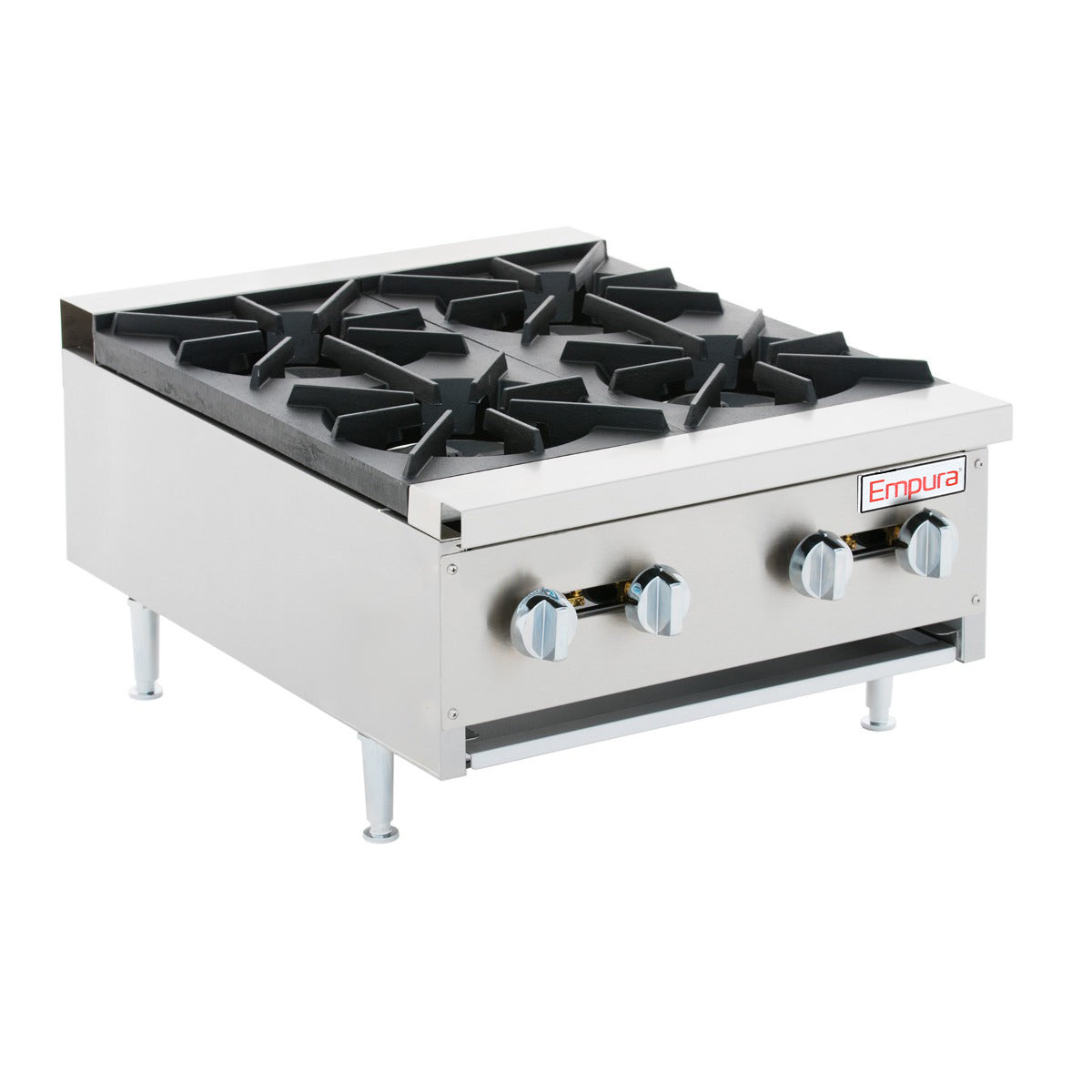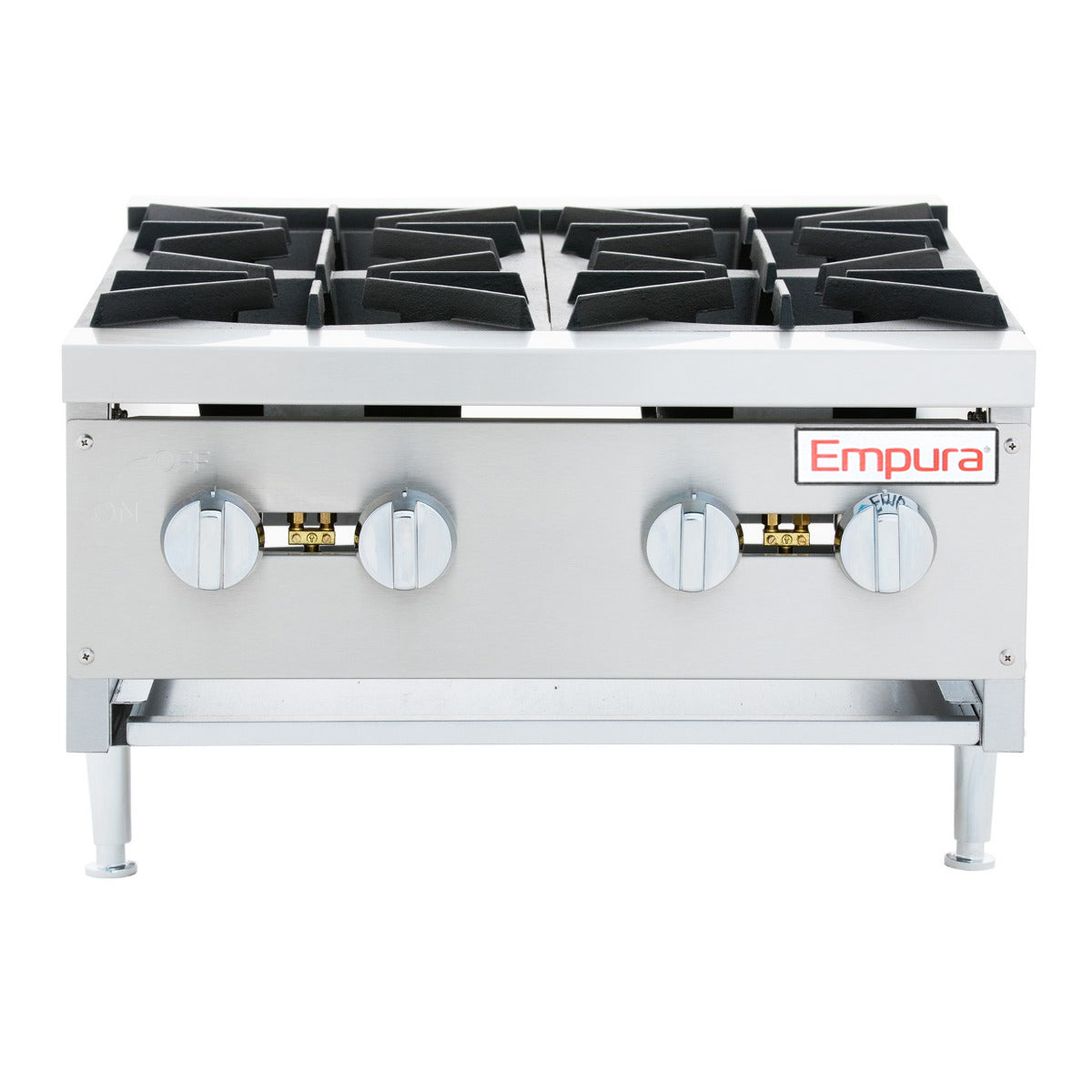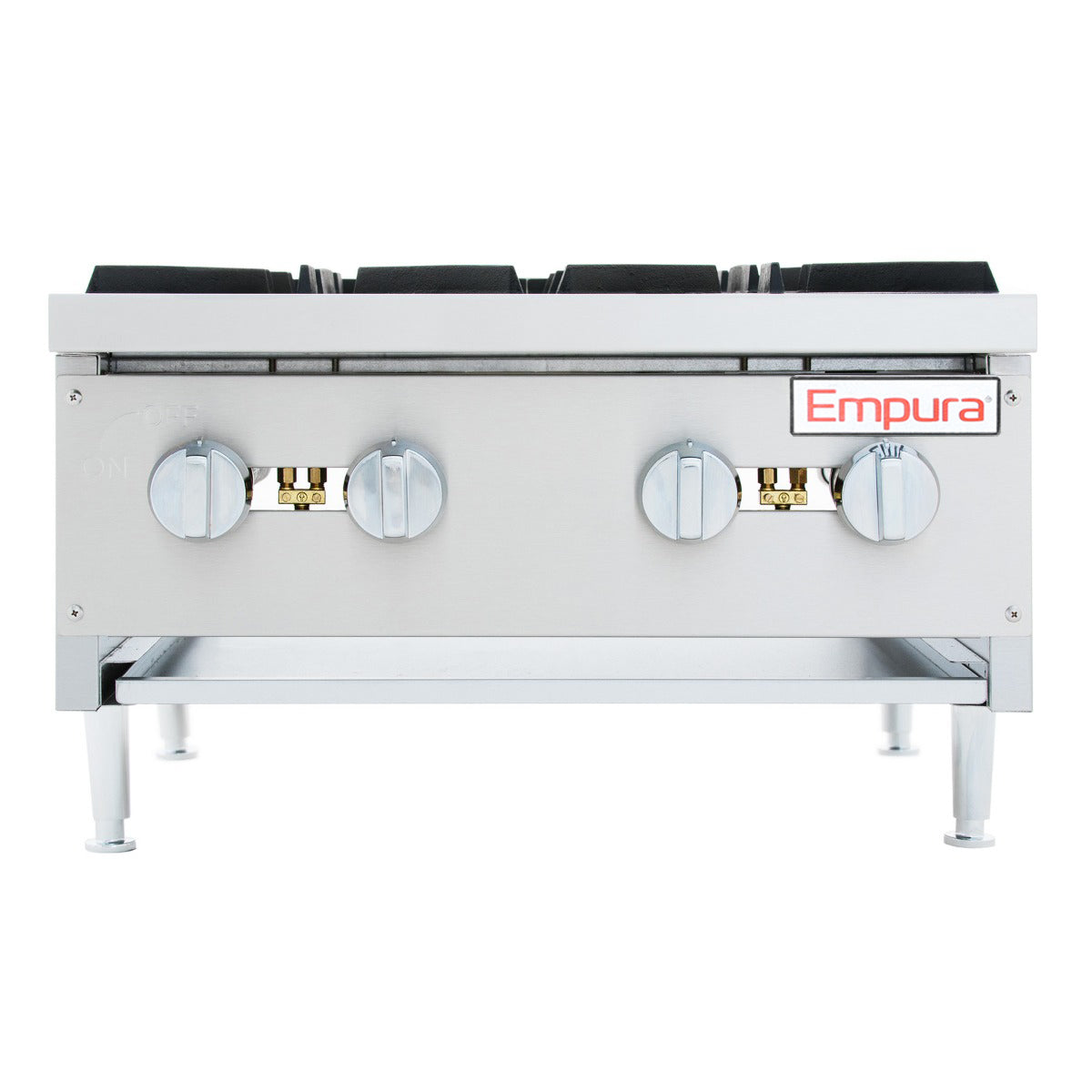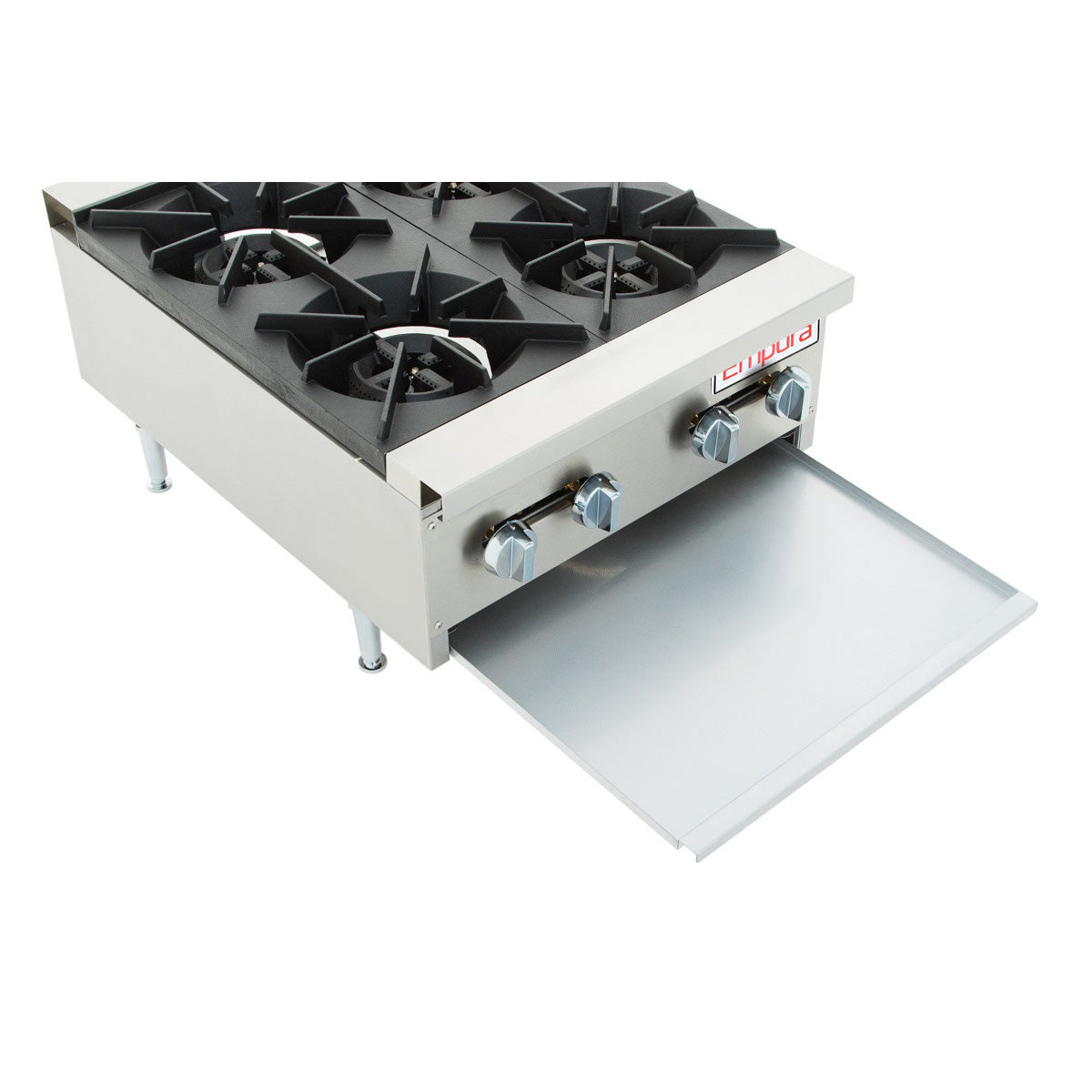

What should you look for in a gas hot plate?
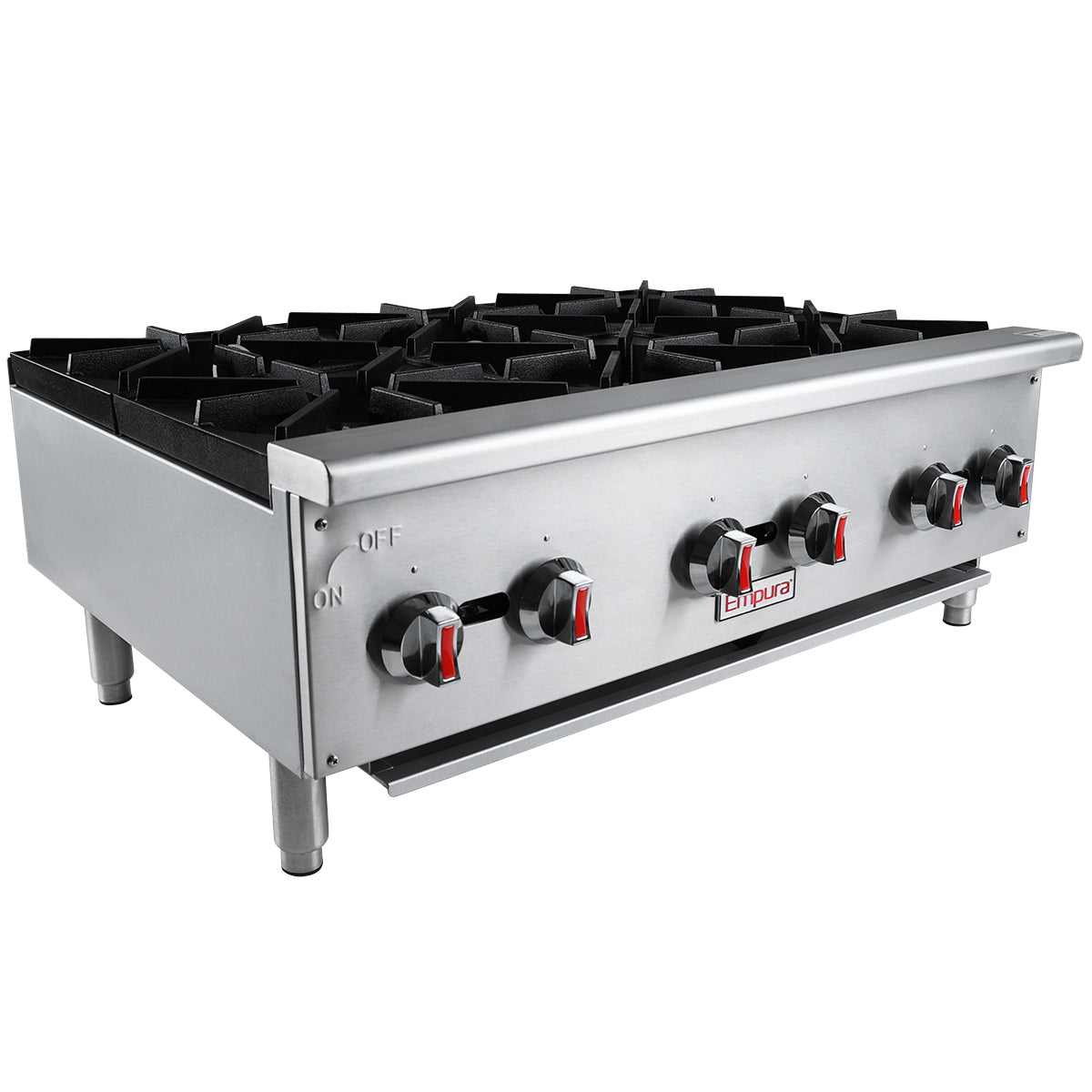
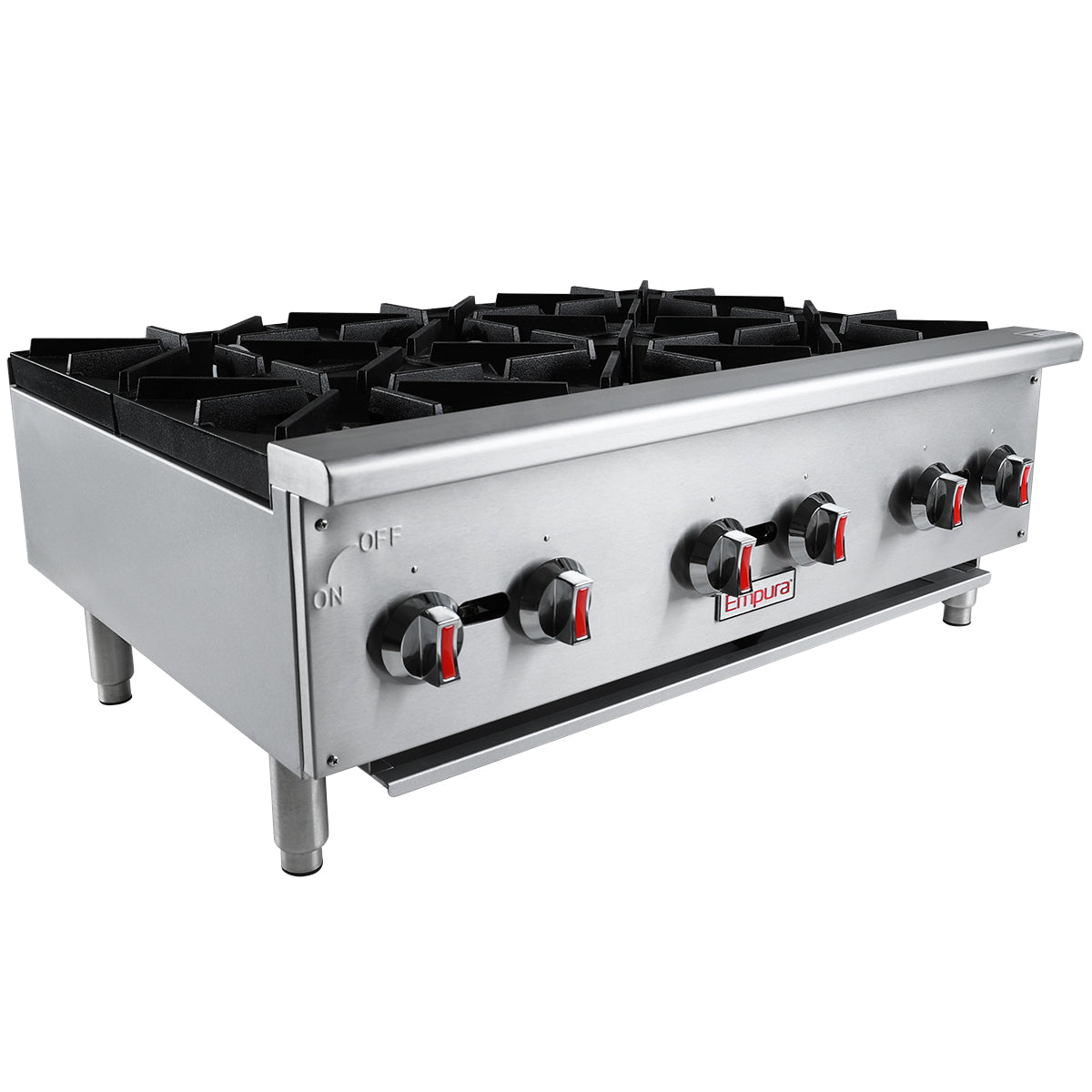
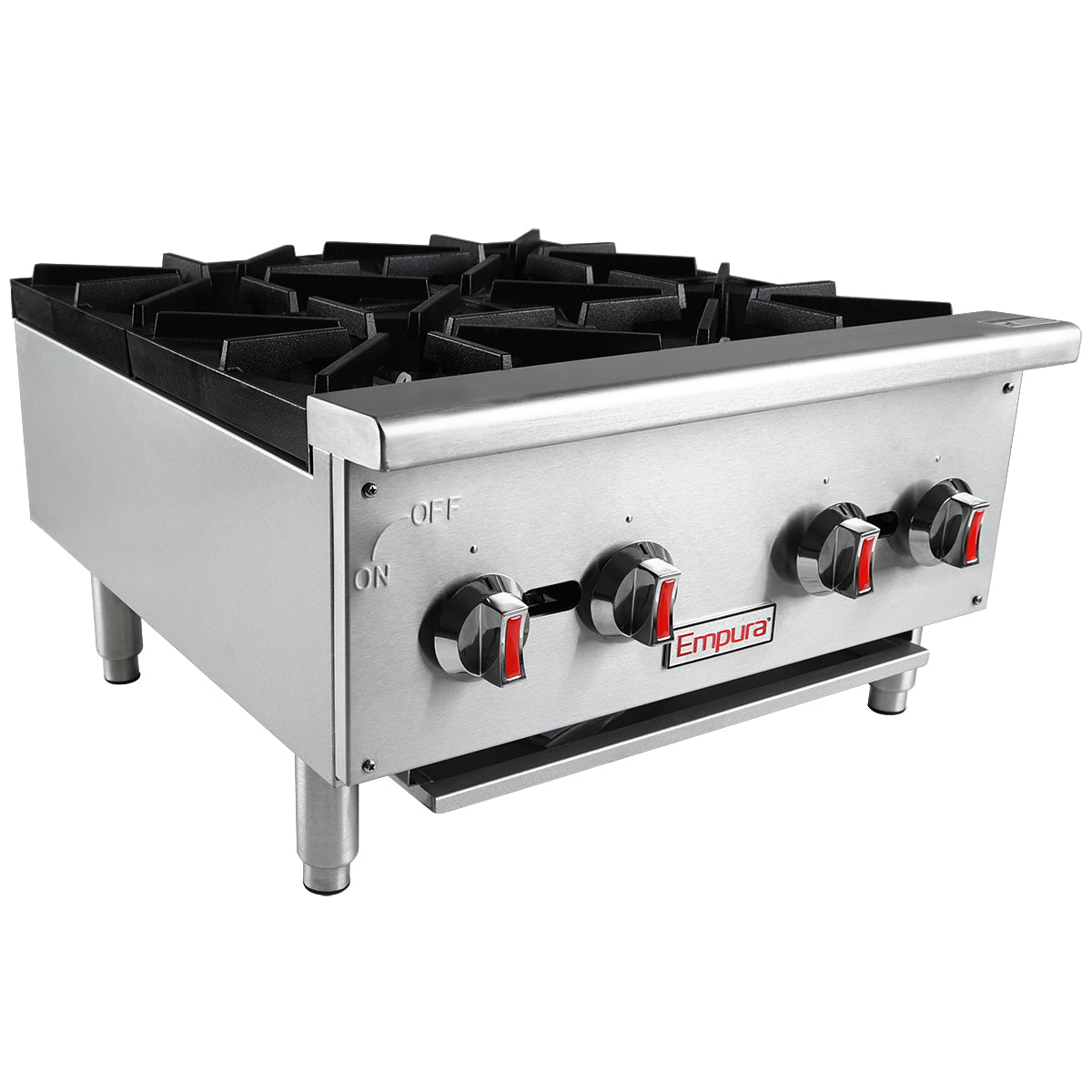
Burner count and total BTU output are the two specs that matter most. More burners let a kitchen run several pots or pans at once, while total BTU output affects how quickly the unit brings liquids to a boil and how well it holds a simmer. Countertop footprint also matters, since a hot plate needs to sit on an existing table or stand rather than a dedicated base.
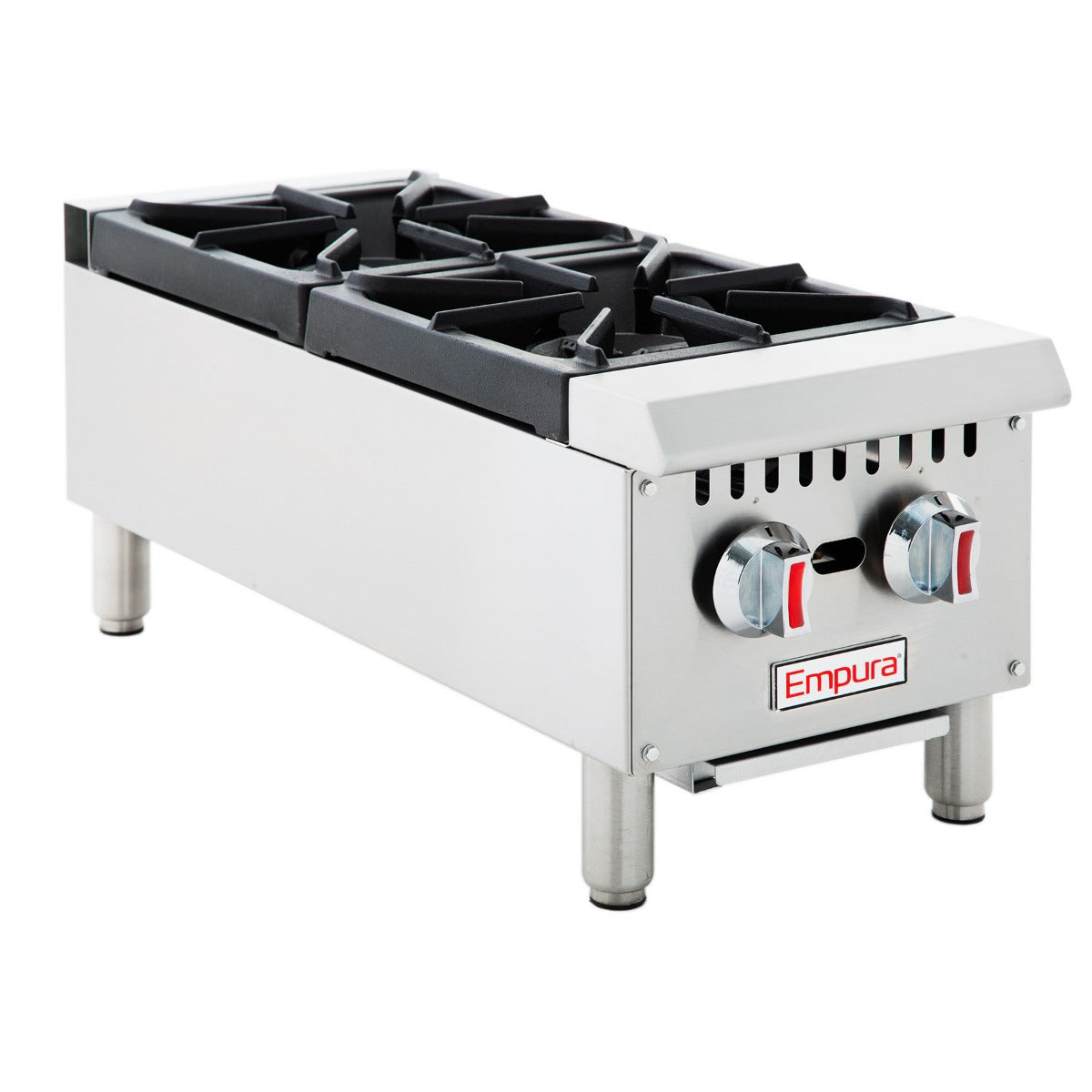
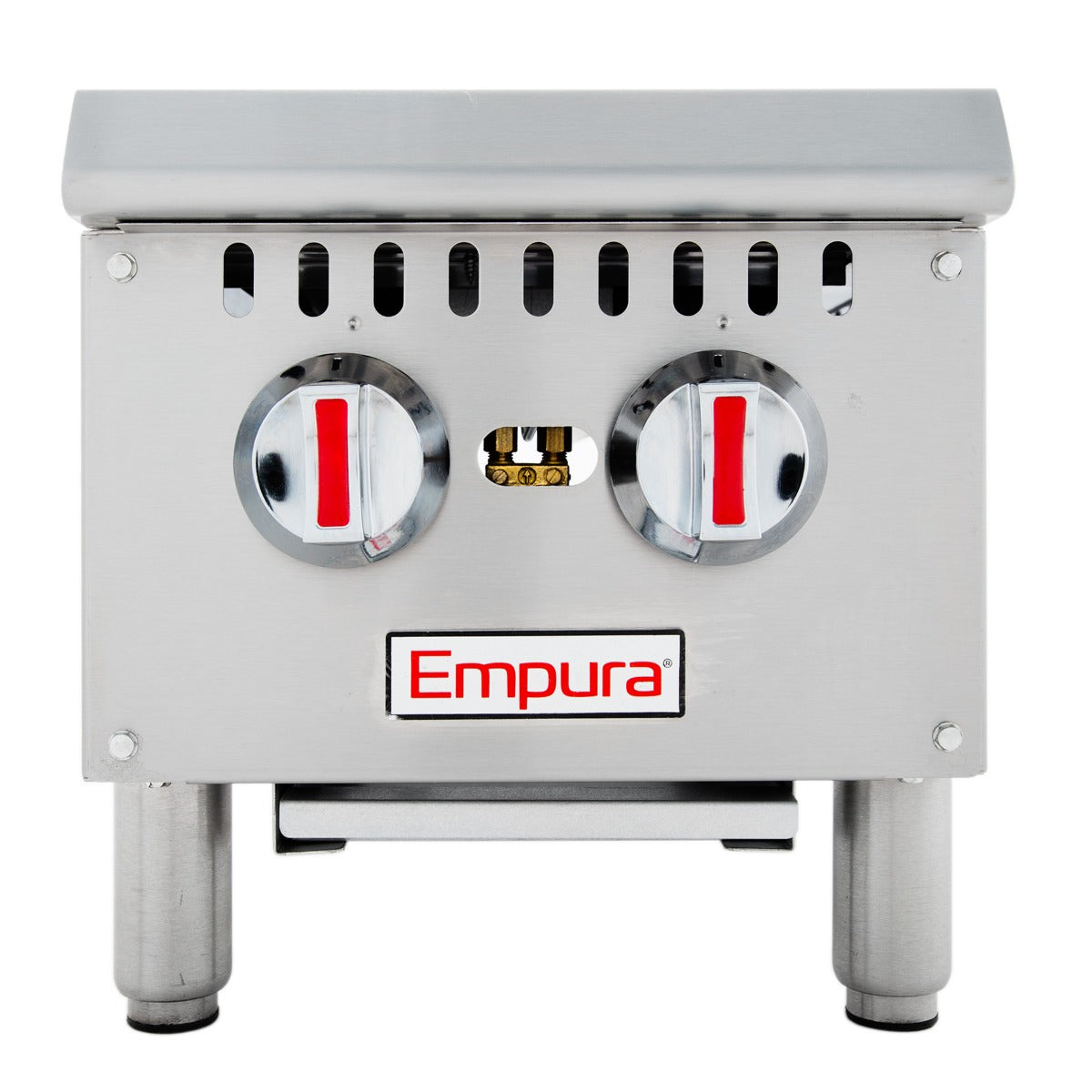
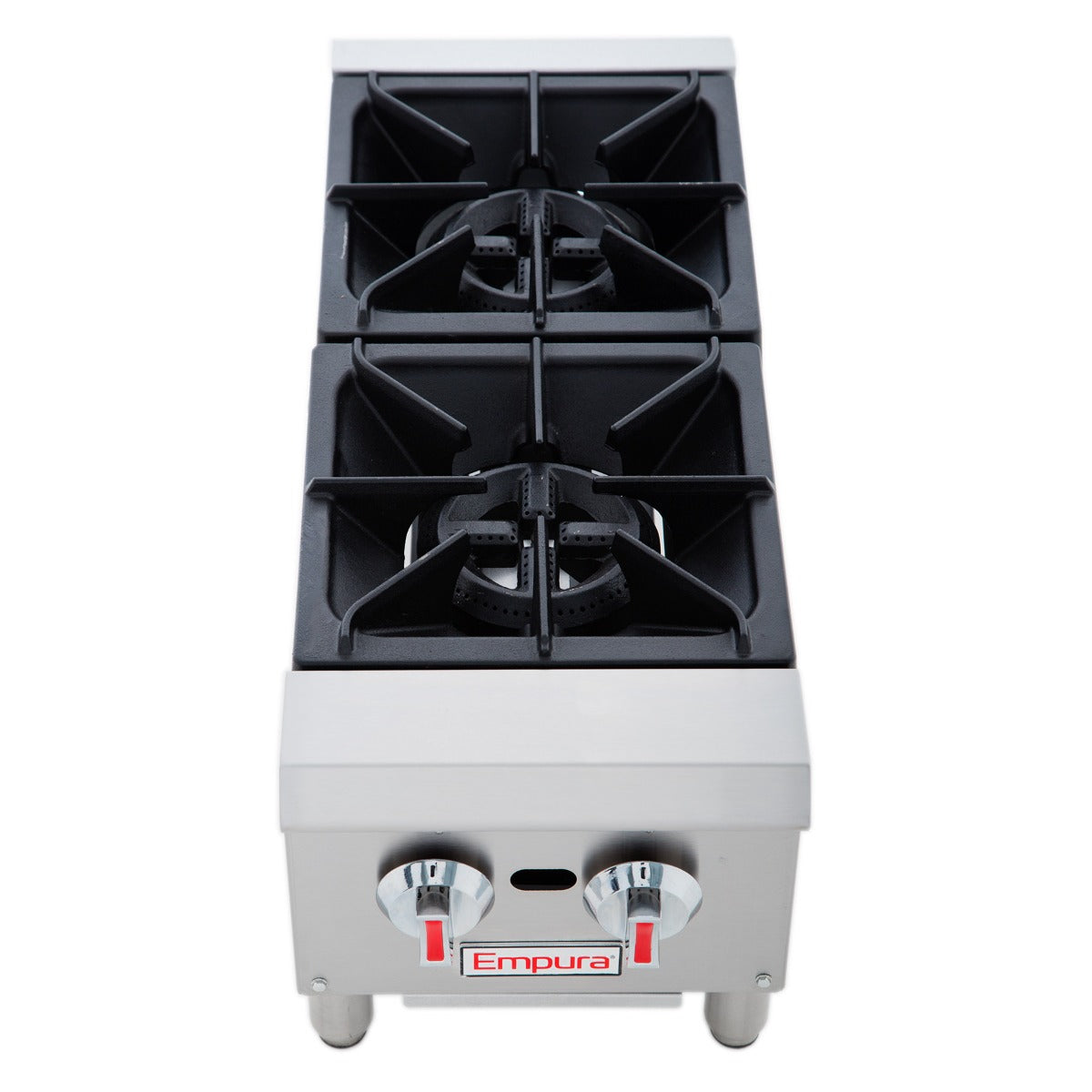
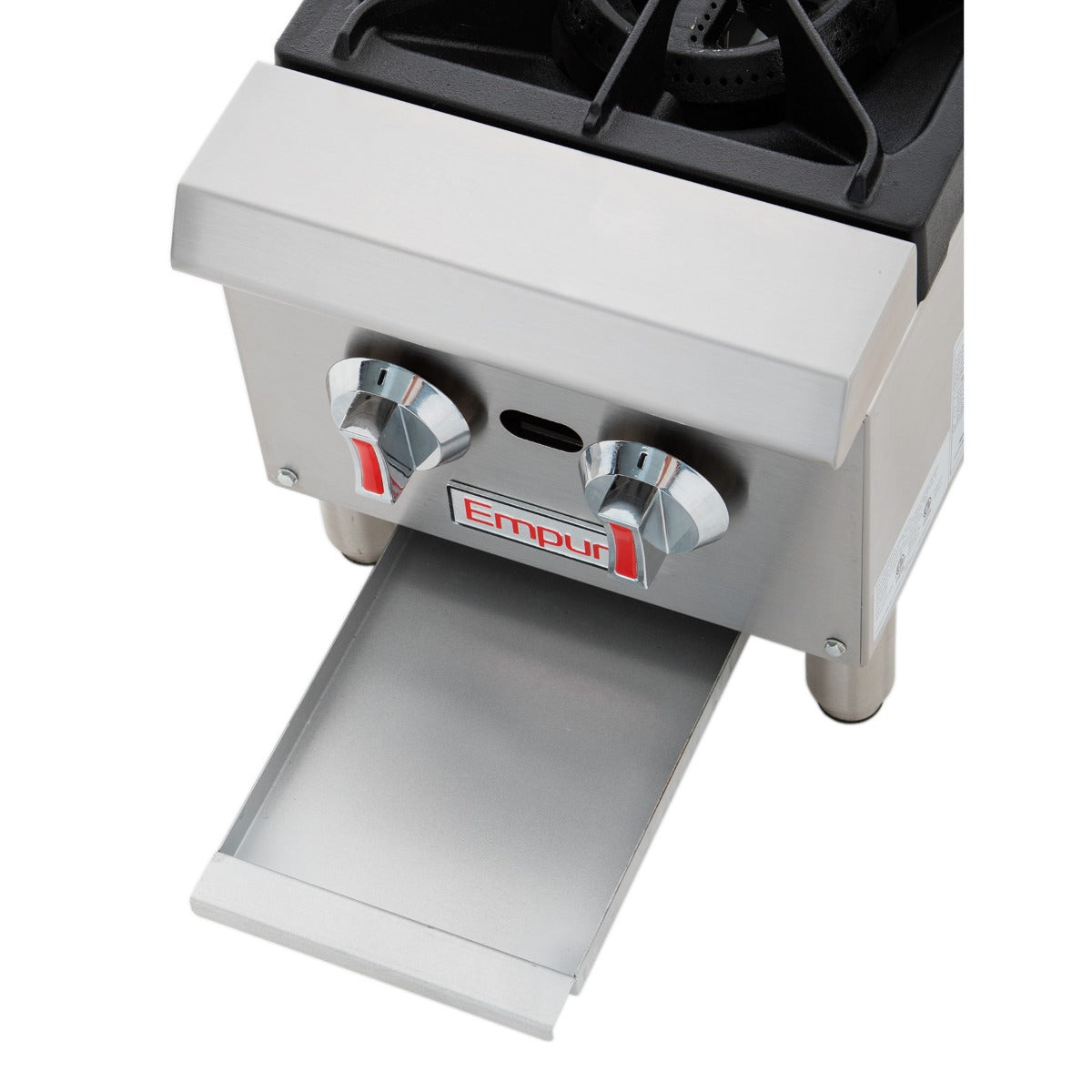
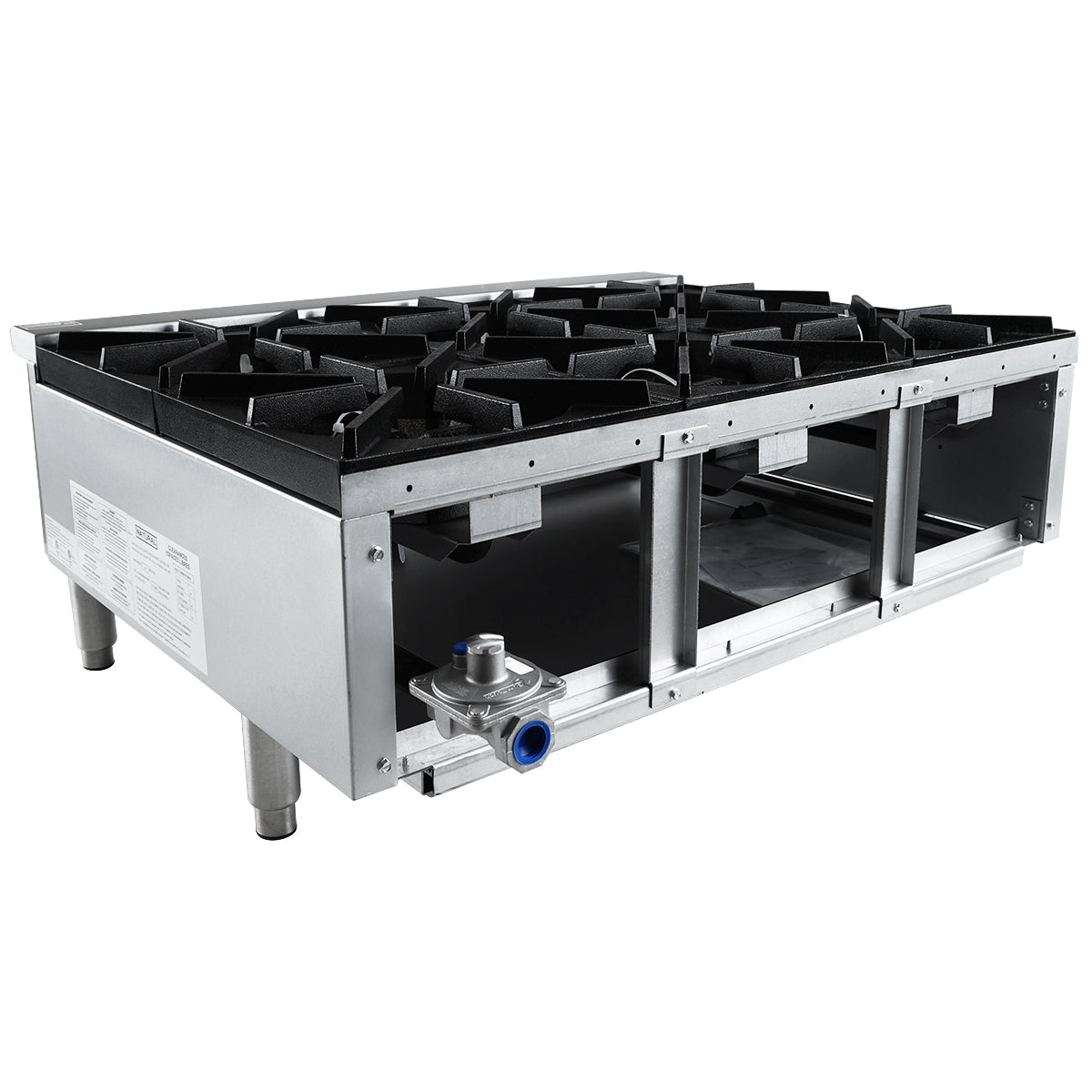
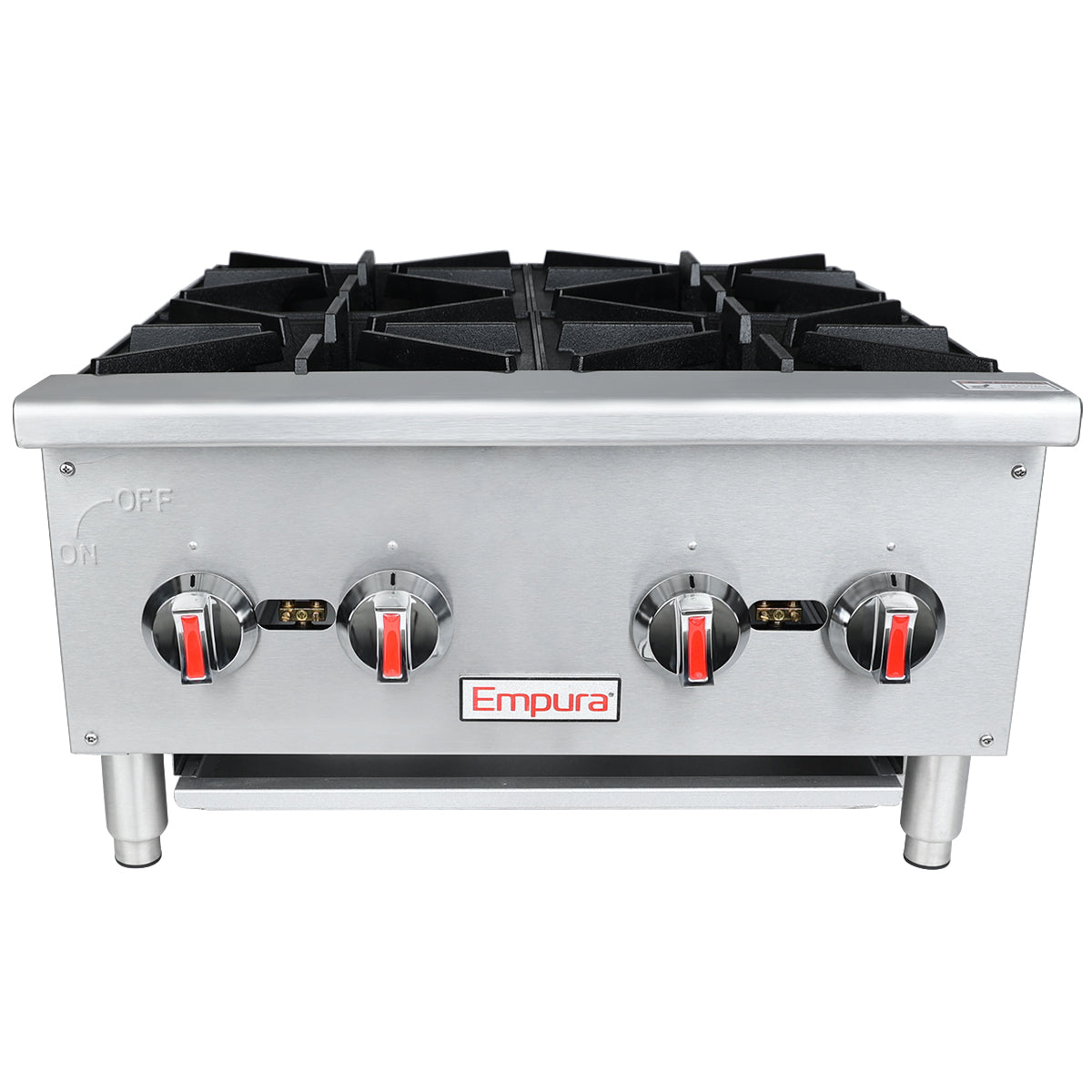
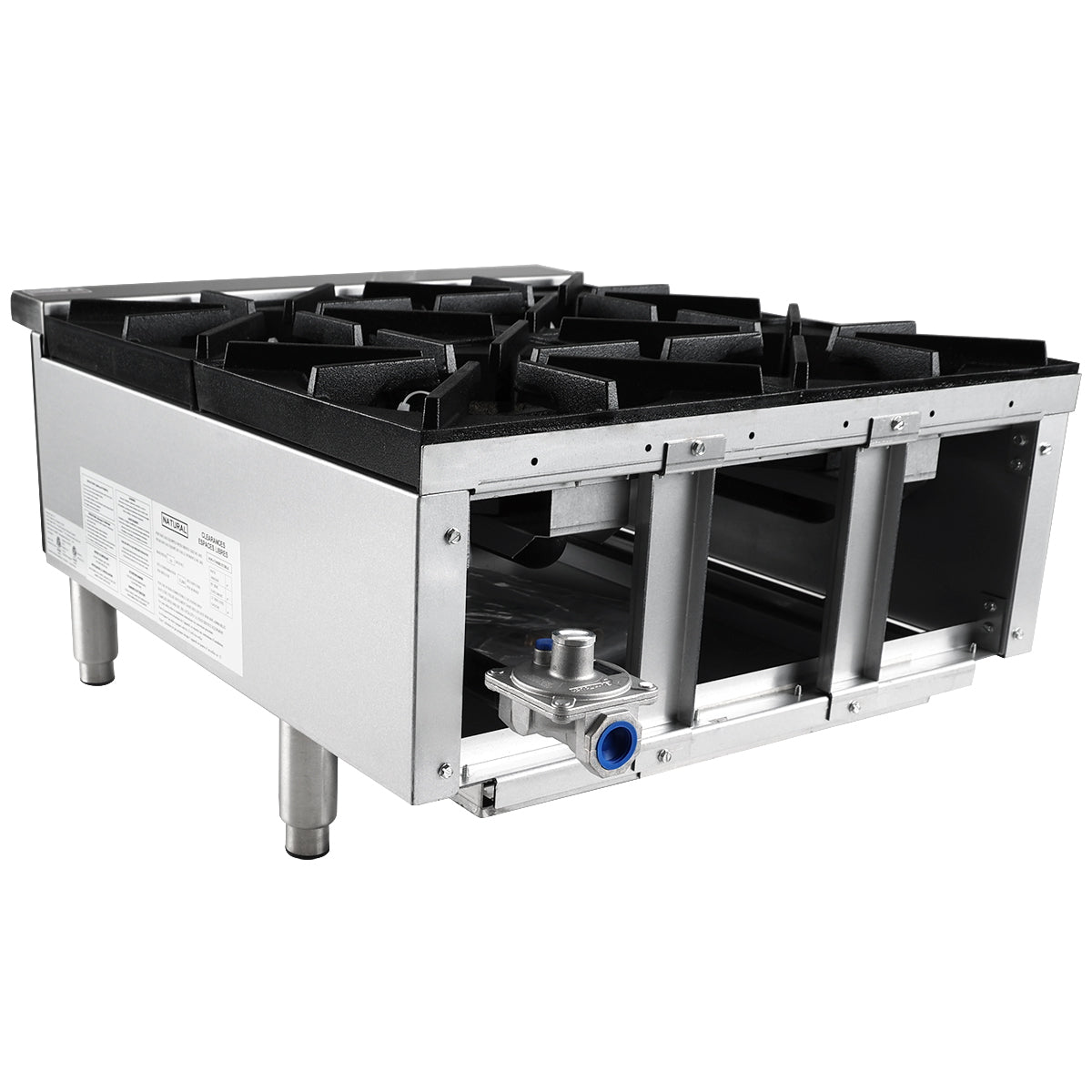
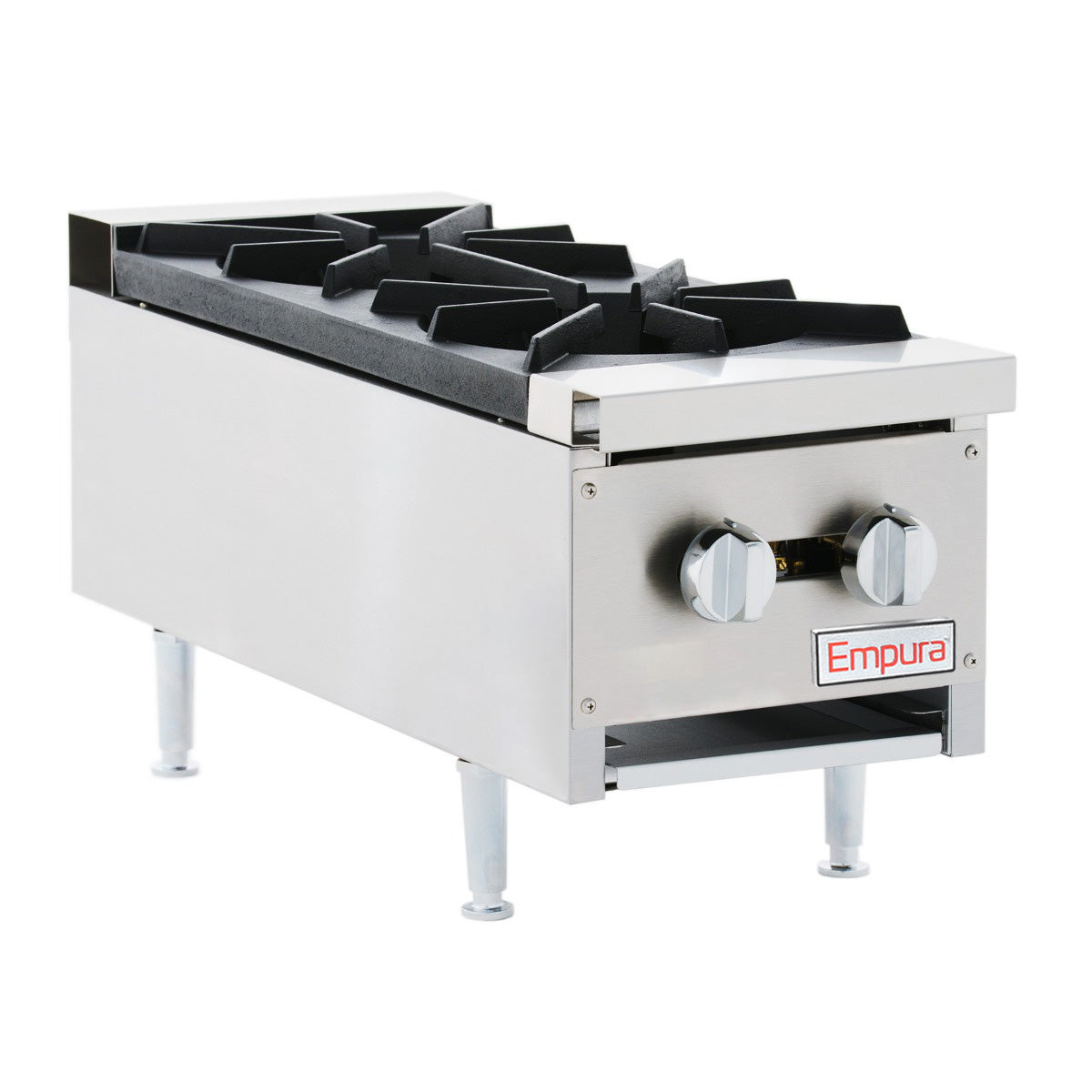
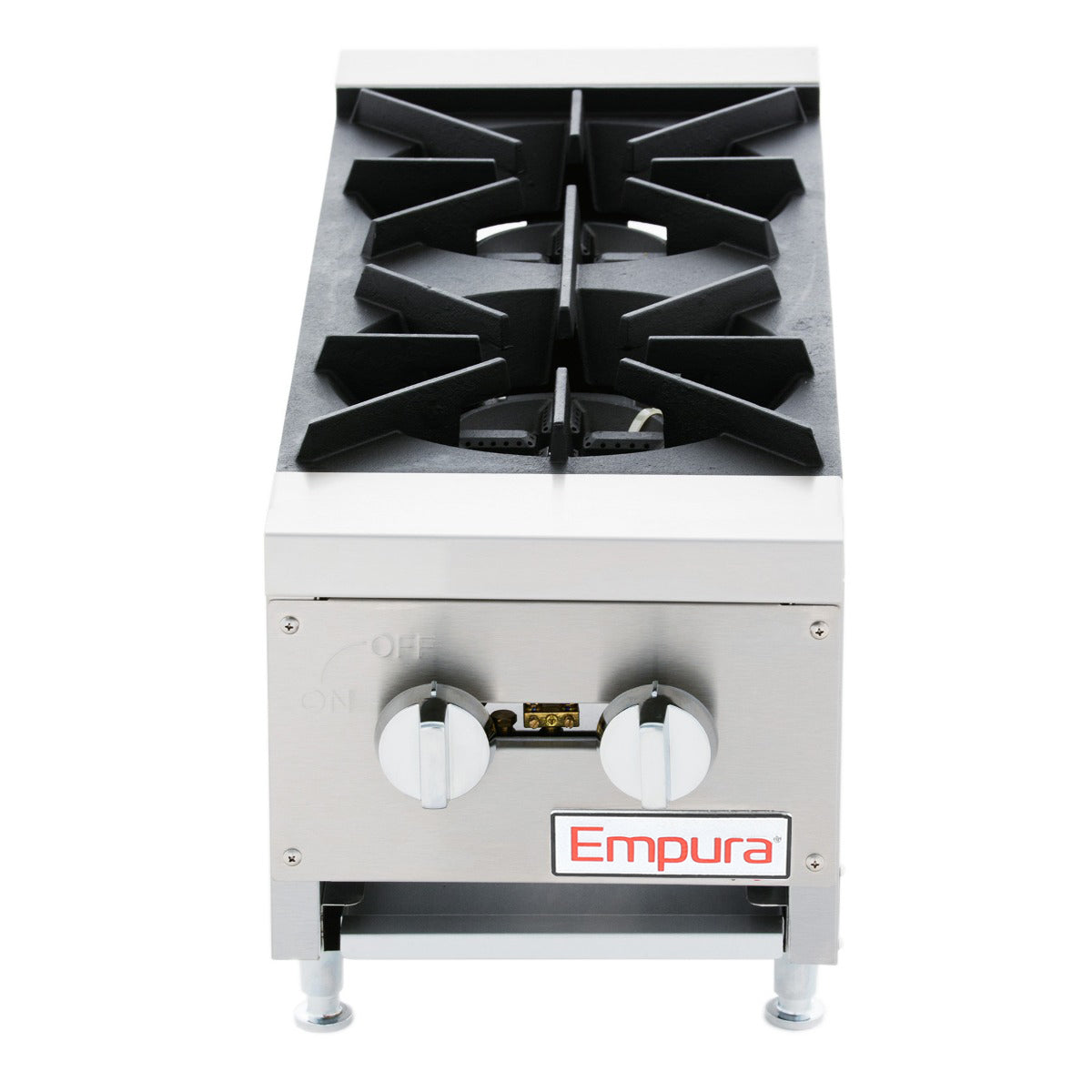
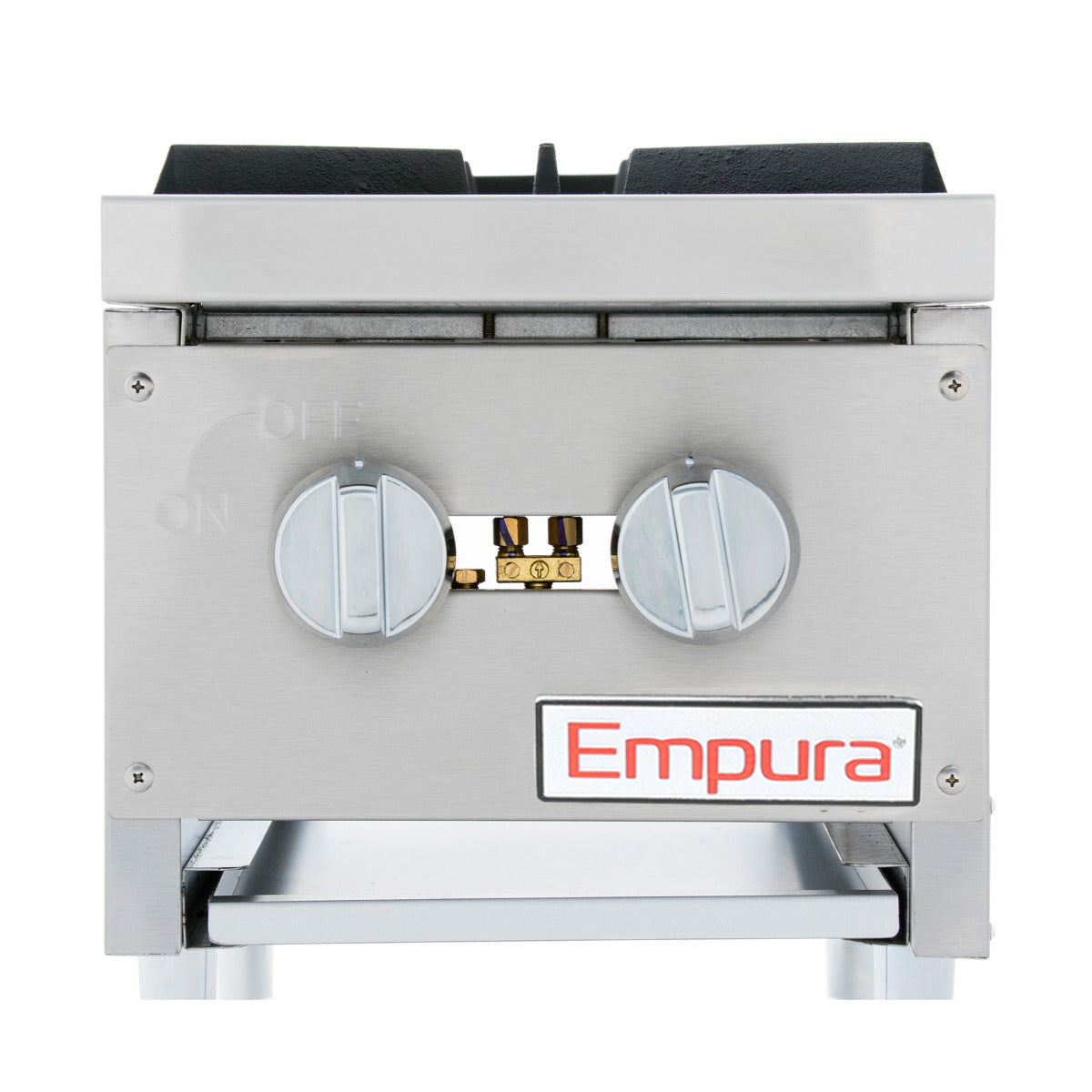
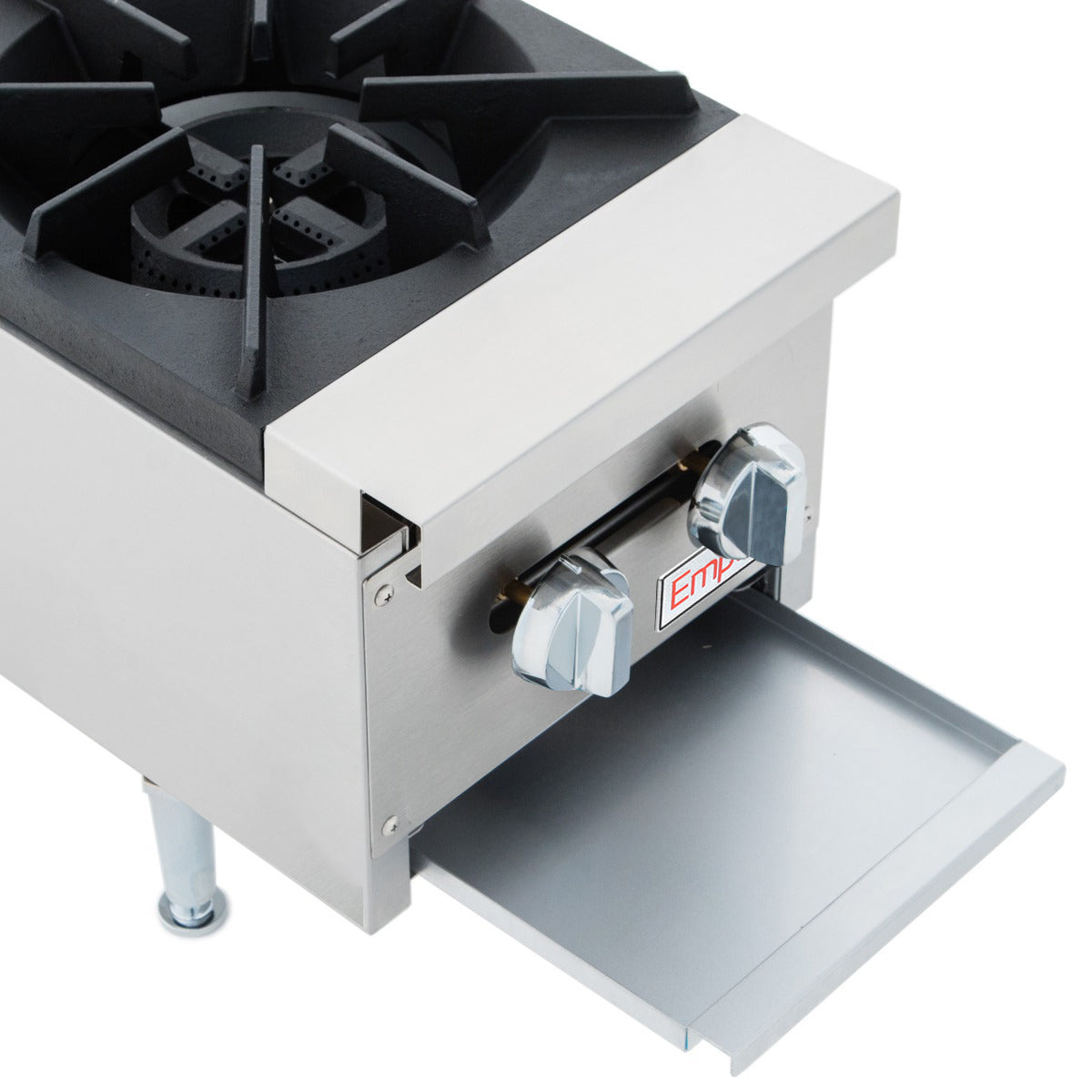
Empura's gas hot plates are available in 12", 24", and 36" widths with 2, 4, or 6 burners. Output ranges from 50,000 BTU on the smaller 2-burner units up to 150,000 BTU on the 6-burner model. Most units include cast iron grates, which hold up well under heavy pots and are simple to remove for cleaning.
Who uses gas hot plates?
- Restaurants
- Catering Operations
- Food Trucks
- Schools
- Healthcare Facilities
- Cafeterias
Frequently asked questions
What is a gas hot plate used for?
A gas hot plate is used for sautéing, boiling, and simmering on a countertop, giving a kitchen extra burner capacity without installing a full range or oven base.
What is the difference between a hot plate and a range?
A hot plate is a countertop unit with open burners only, while a range combines burners with an oven underneath. Hot plates are typically used to add burner space, not to replace a kitchen's primary cooking equipment.
How many BTUs does a commercial hot plate need?
The right BTU output depends on what's being cooked and how quickly it needs to reach temperature. Smaller 2-burner units in the 50,000 to 60,000 BTU range work for lighter-volume tasks, while larger 4 and 6-burner models with 100,000 BTU or more are better suited to higher-volume cooking.
Can a gas hot plate run on propane?
Many commercial gas hot plates are available in natural gas configurations, with some models also offered for liquid propane. The fuel type should always match the building's existing gas supply or an approved manufacturer conversion.
Do gas hot plates need ventilation?
Most commercial gas cooking equipment, including hot plates, requires a properly sized exhaust hood to comply with local fire and health codes. Requirements vary by jurisdiction, so operators should confirm with their local authority before installation.