What should you look for in water filtration systems?
Match the system to the appliance, peak flow rate, daily production, water pressure, connection size, contaminant-reduction claims, and local water conditions. Check the micron rating and whether scale control is appropriate for the equipment. Provide space for cartridge replacement and flushing, and never exceed the rated capacity or service interval.
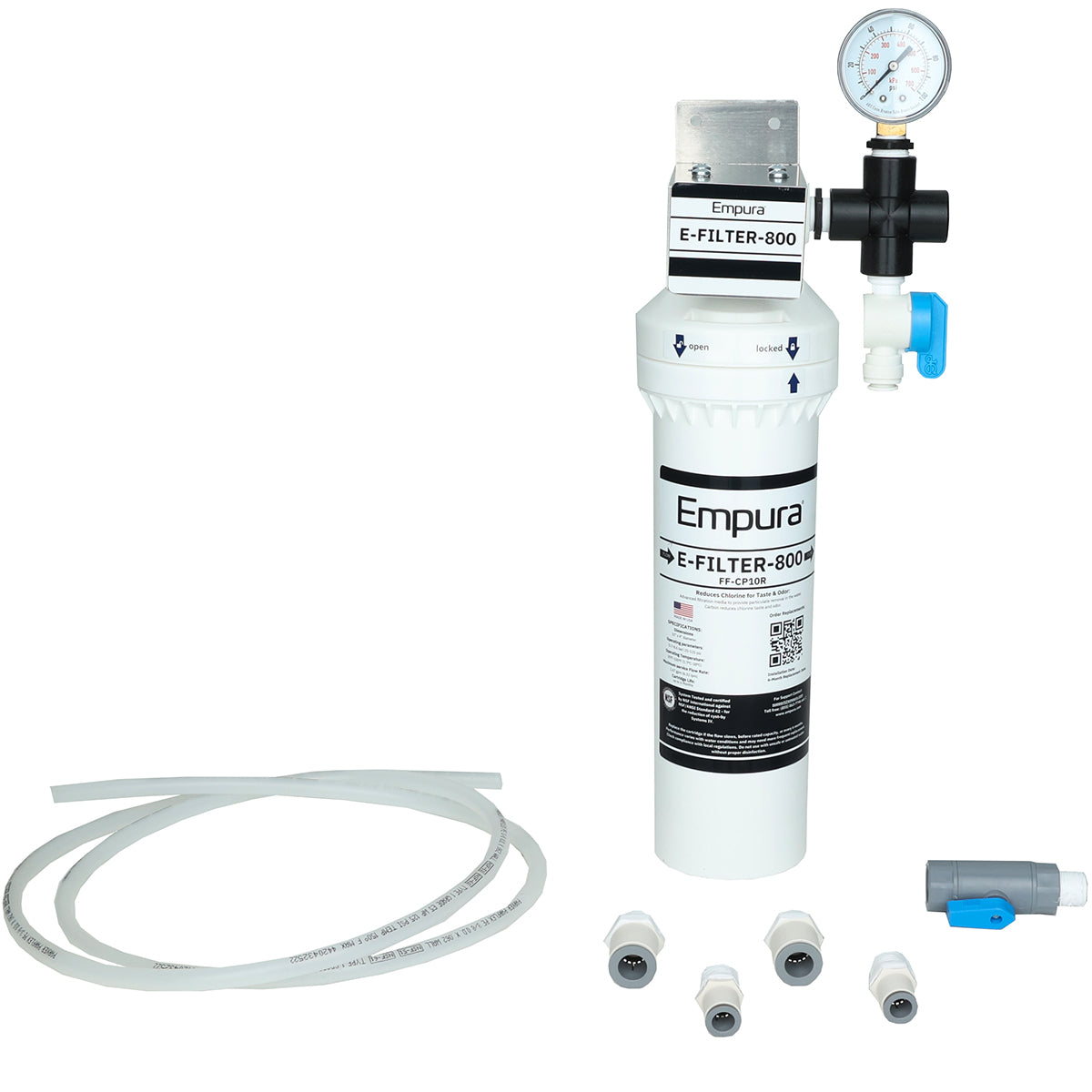
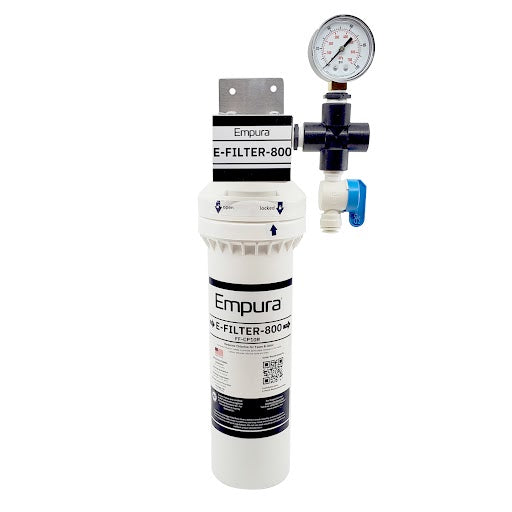
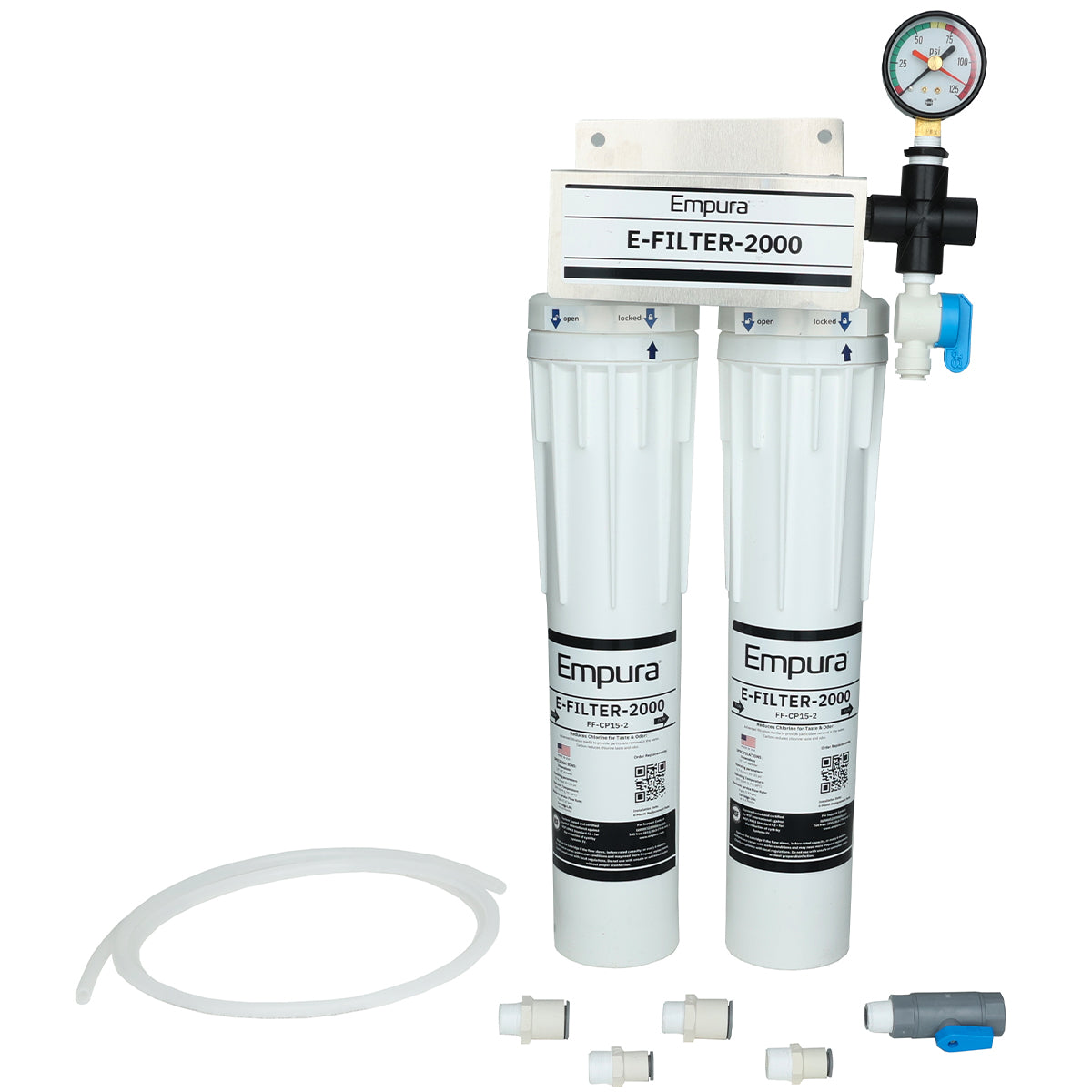
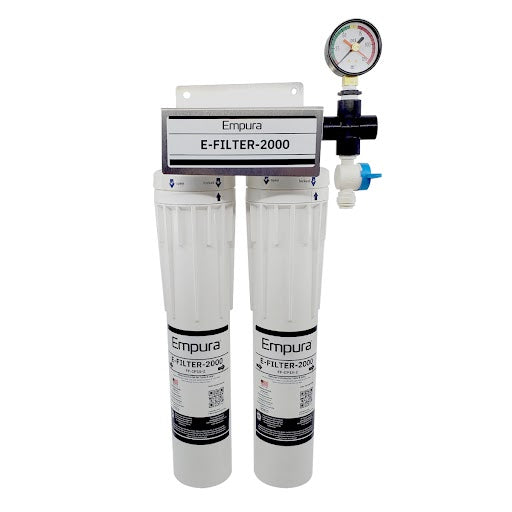
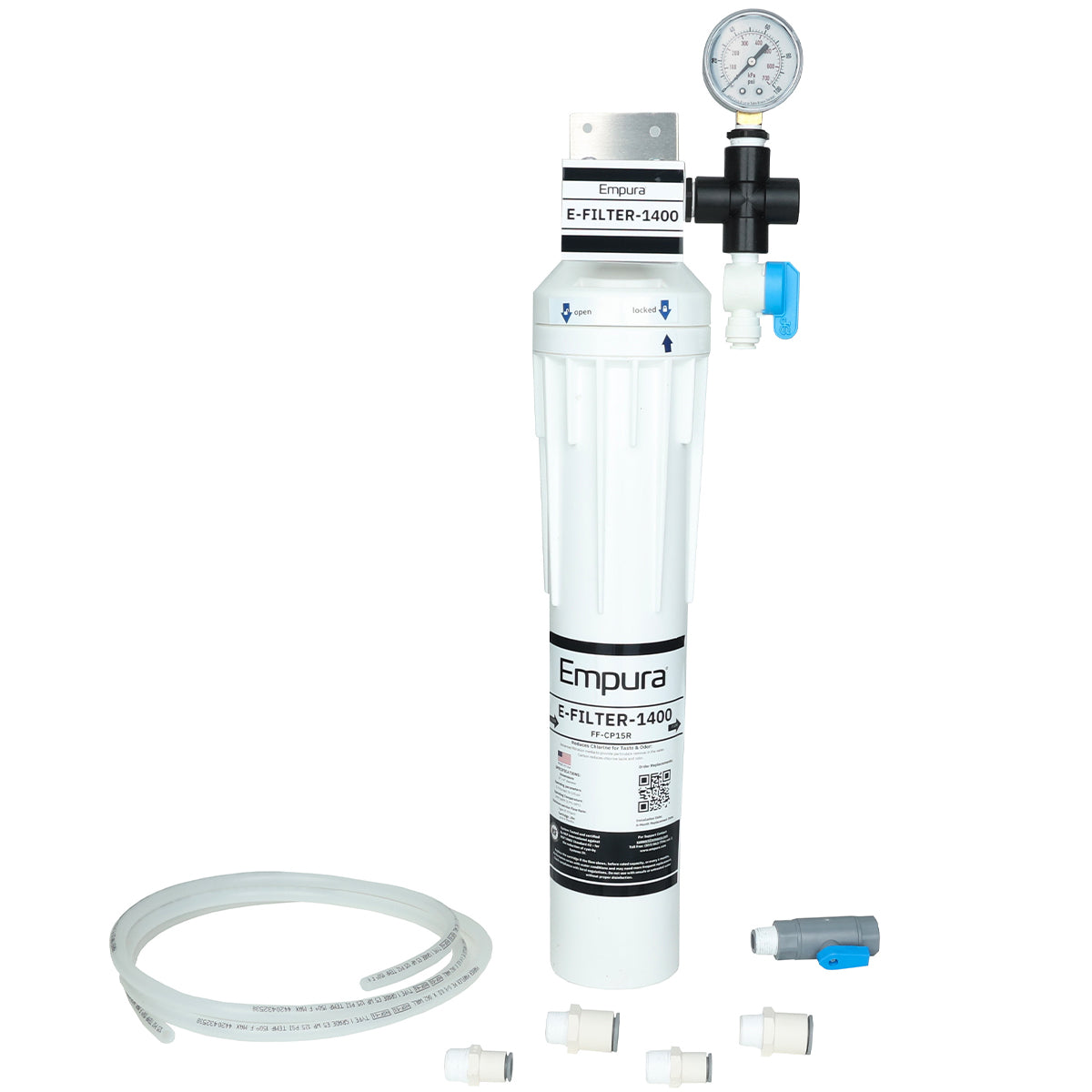
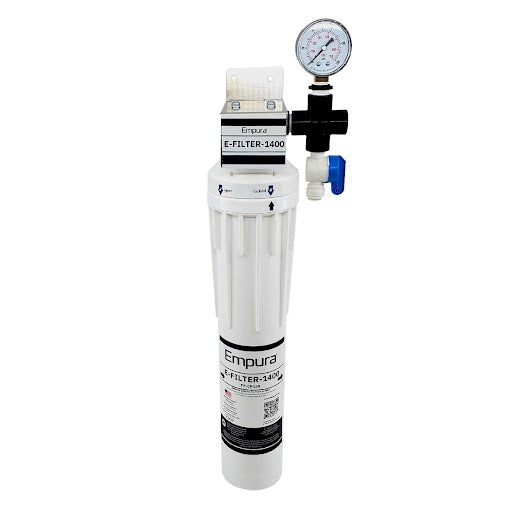
Empura's current systems are listed for commercial ice machines, with two models also identified for coffee brewers. The collection shows 0.5-micron filtration, scale inhibitor, and rated flow rates of 1.67, 2, or 4 gallons per minute. The associated equipment-output ratings are listed at 800, 1,400, or 2,000 pounds per day, depending on the system, and the systems carry NSF certification. When it is time for maintenance, matching replacement cartridges are available for each system.
Who uses water filtration systems?
- Restaurants
- Hotels
- Bars
- Catering Operations
- Schools
- Healthcare Facilities
- Cafeterias
- Convenience Stores
Frequently asked questions
Why use a water filter on a commercial ice machine?
Appropriate filtration can reduce sediment and chlorine-related taste or odor, while scale-control media can help manage mineral deposits. Benefits depend on the water and the system's certified claims.
What does a 0.5-micron rating mean?
It describes the nominal or absolute particle size addressed by the filter, depending on how the manufacturer states the rating. It does not by itself identify every contaminant the system reduces.
How do I choose the correct flow rate?
Use the appliance manufacturer's demand and the highest simultaneous water draw. The filter must deliver adequate flow without causing unacceptable pressure loss.
Does a scale inhibitor soften water?
No. Scale inhibition and ion-exchange softening are different treatment methods. Test the water and follow the equipment manufacturer's guidance where hardness or scale is a concern.
How often should a commercial water filter be replaced?
Replace it at the rated capacity or time interval, or sooner if flow falls, water conditions require it, or the equipment instructions specify a shorter interval.



 FREE Delivery