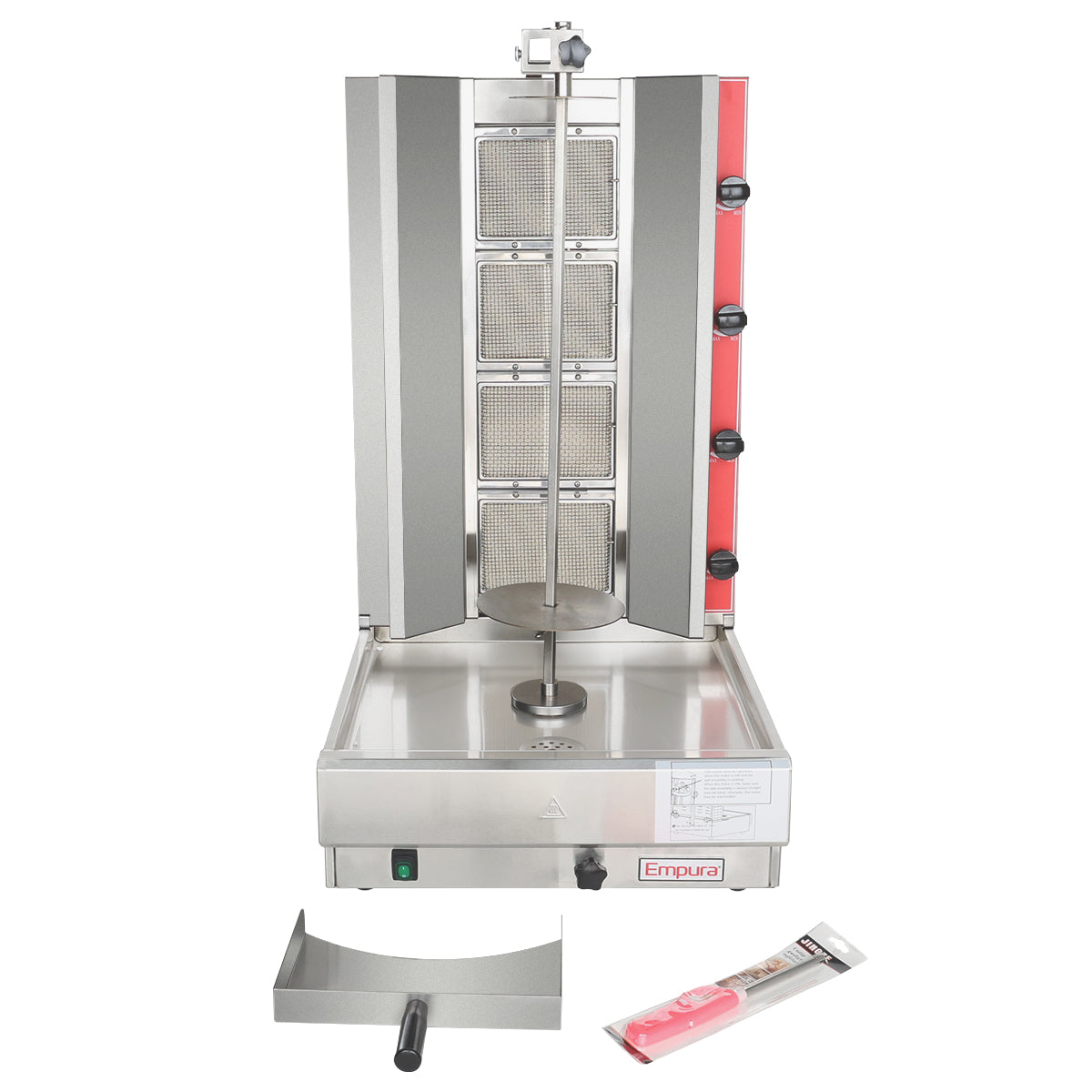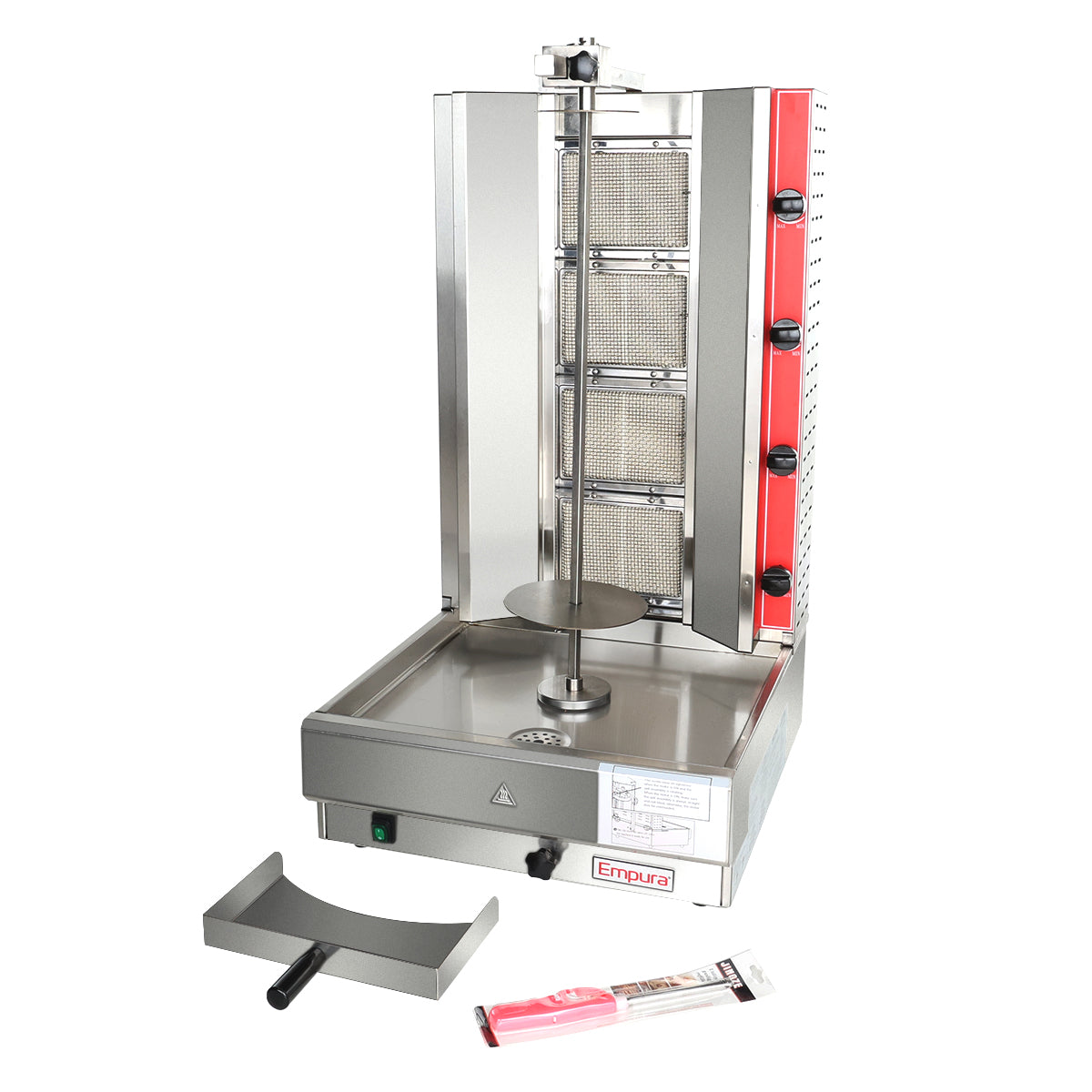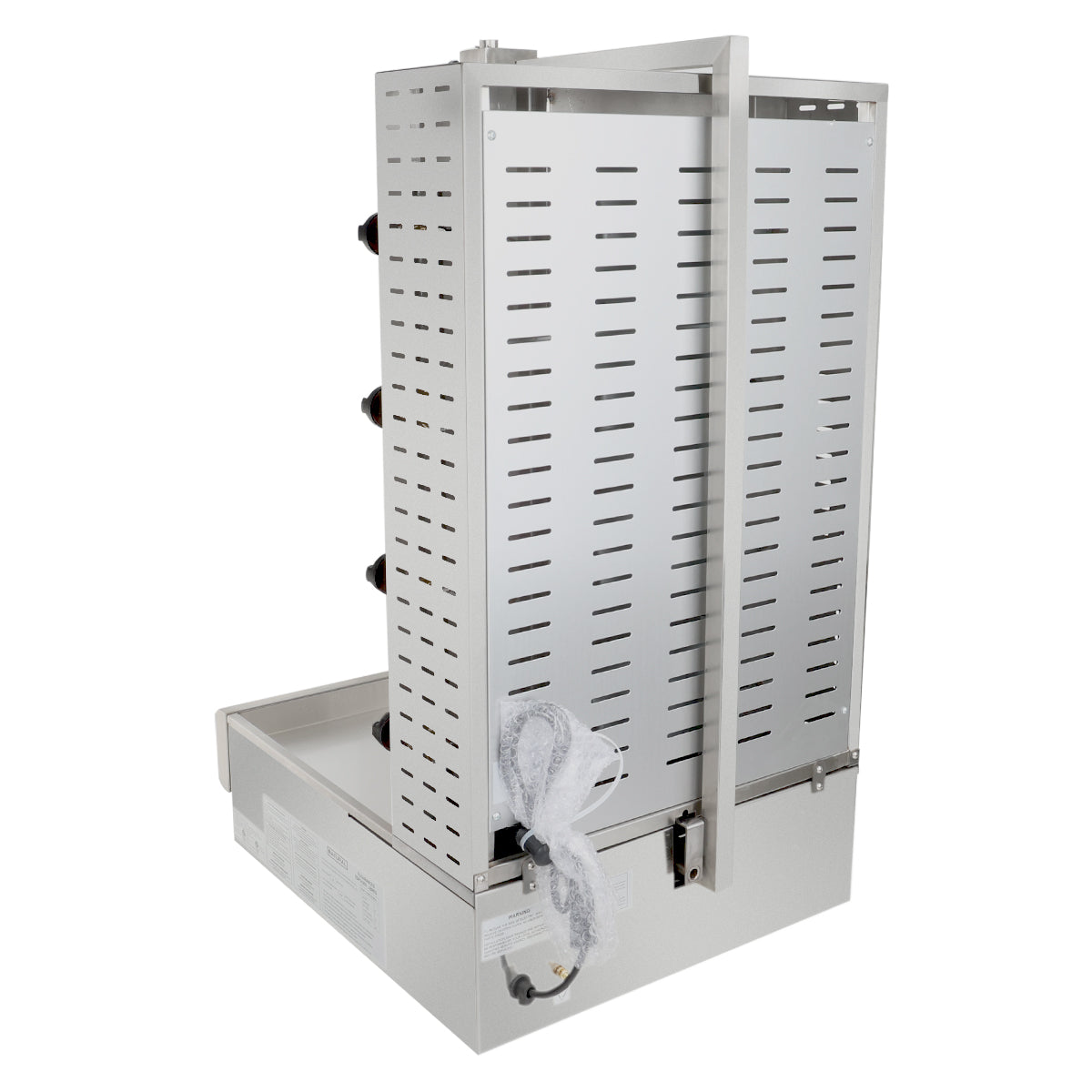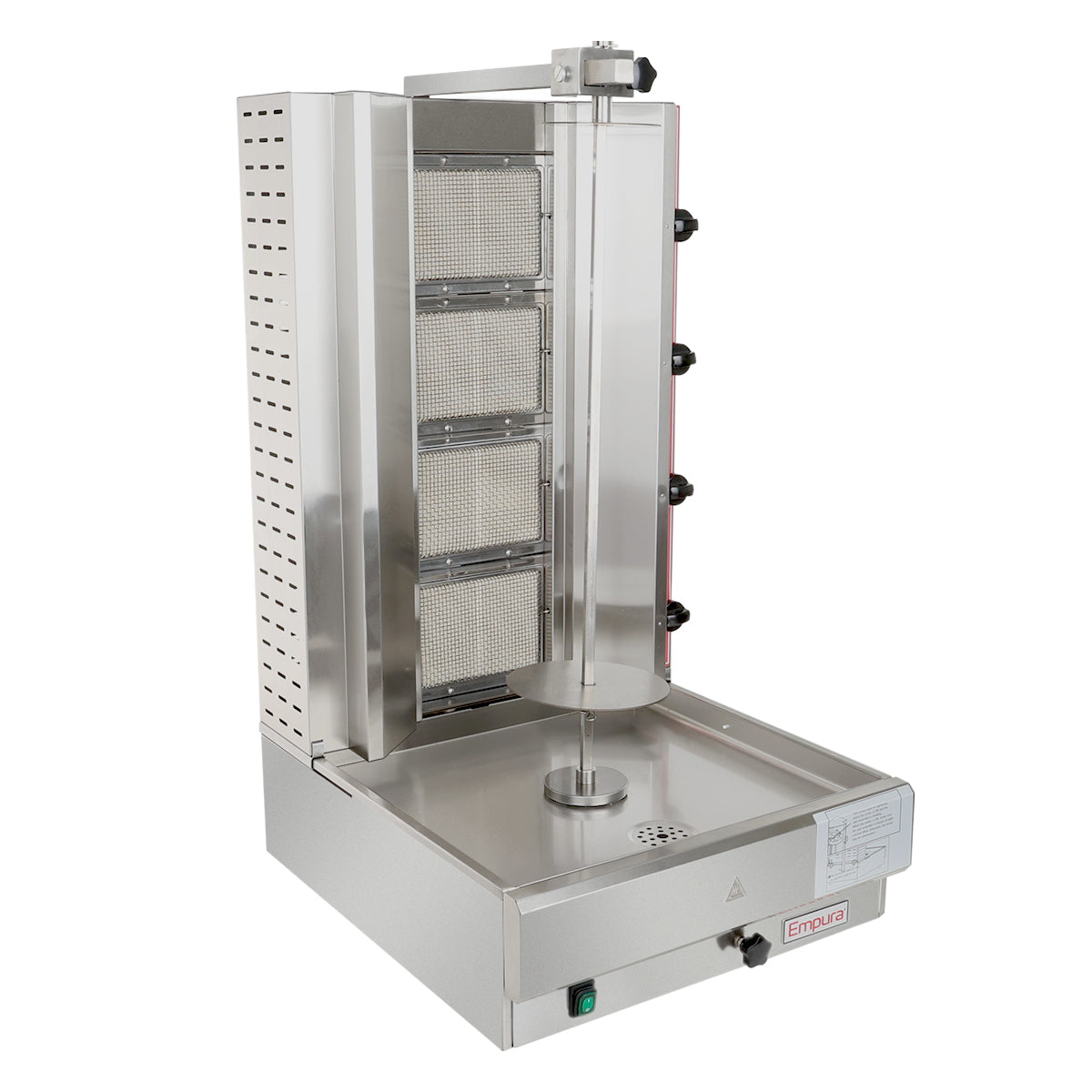

What should you look for in gas vertical broilers?
Match meat capacity to service demand, then compare fuel configuration, burner controls, spit adjustment, installation space, and ventilation requirements. Leave room to load, slice, and clean without crowding the hot cooking surface.
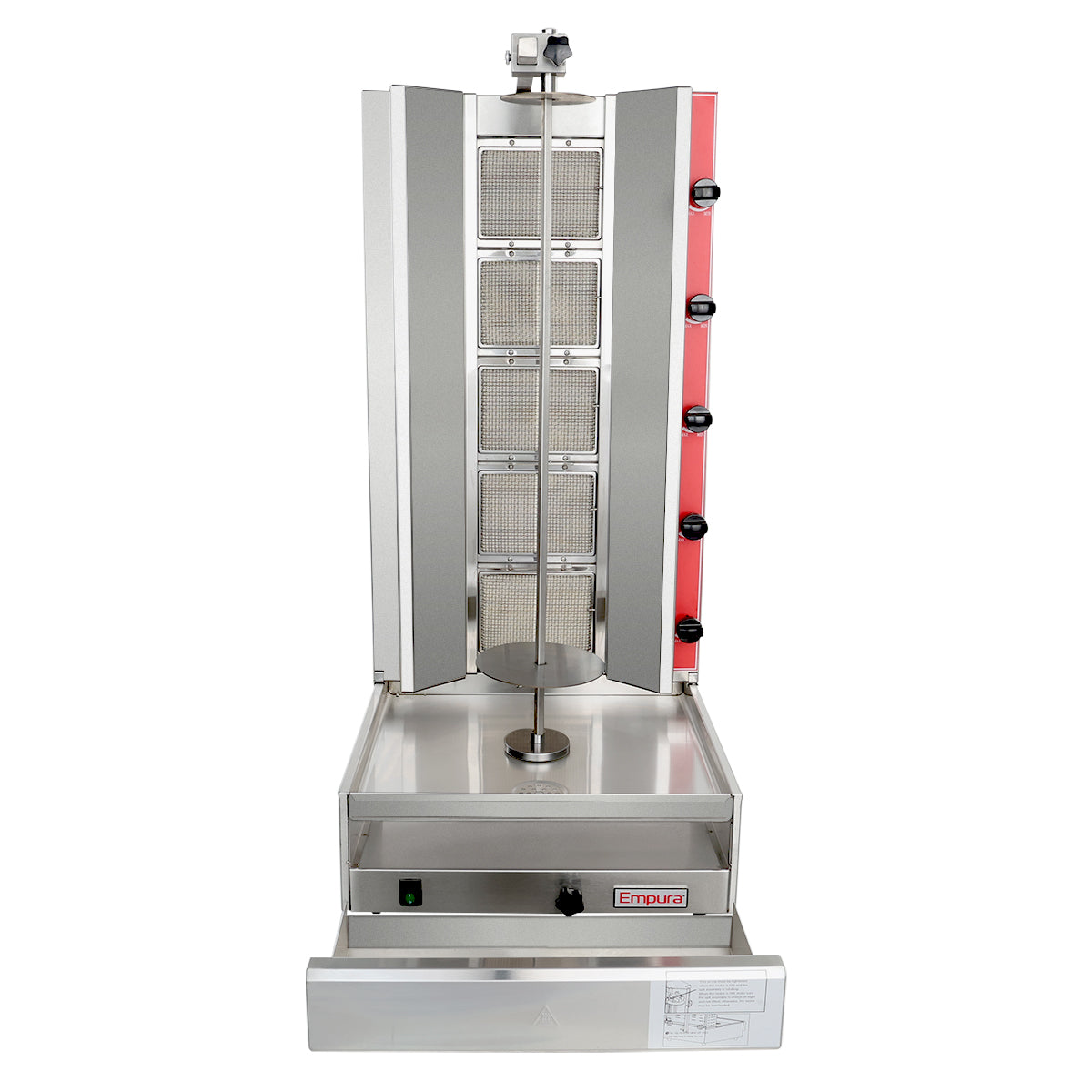
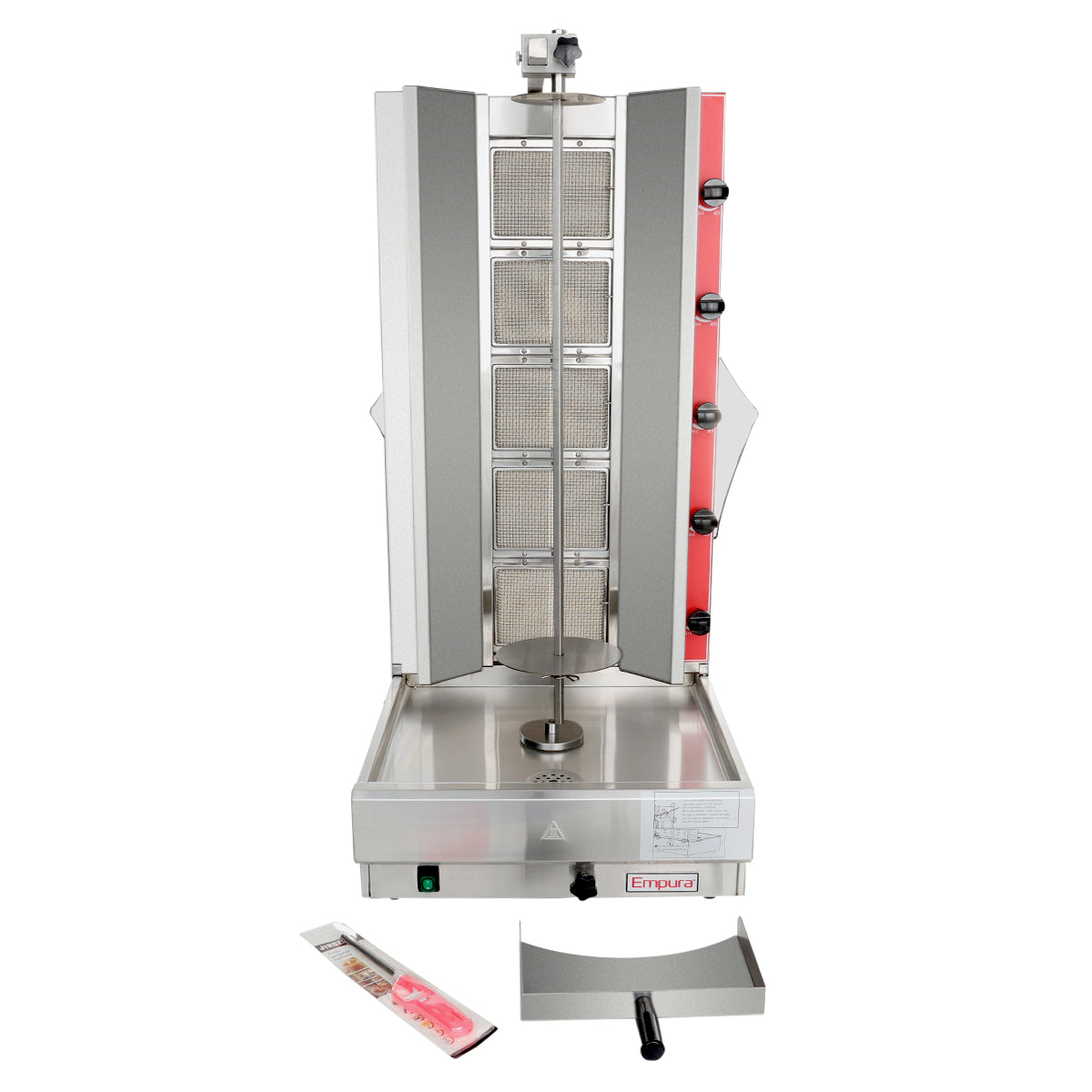
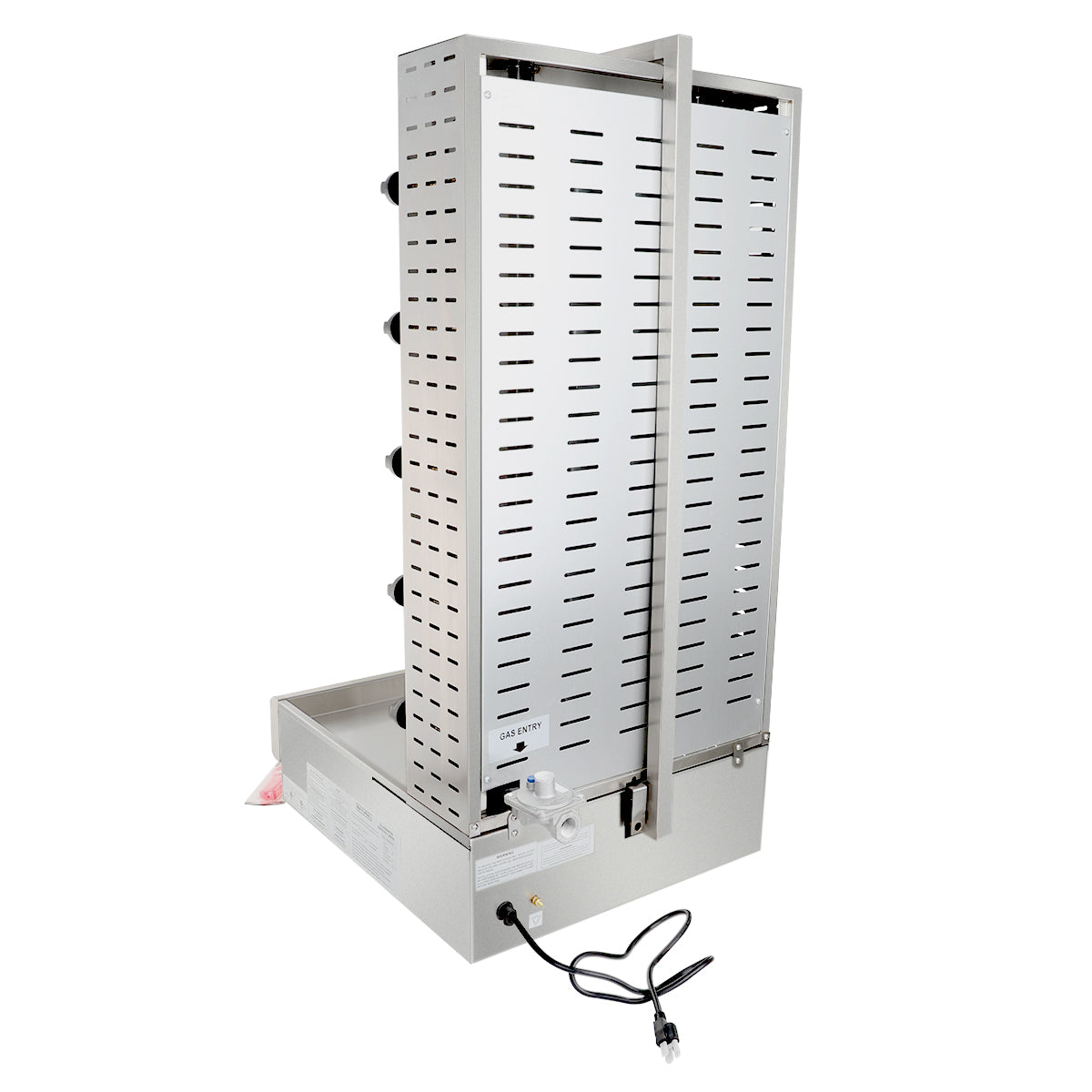
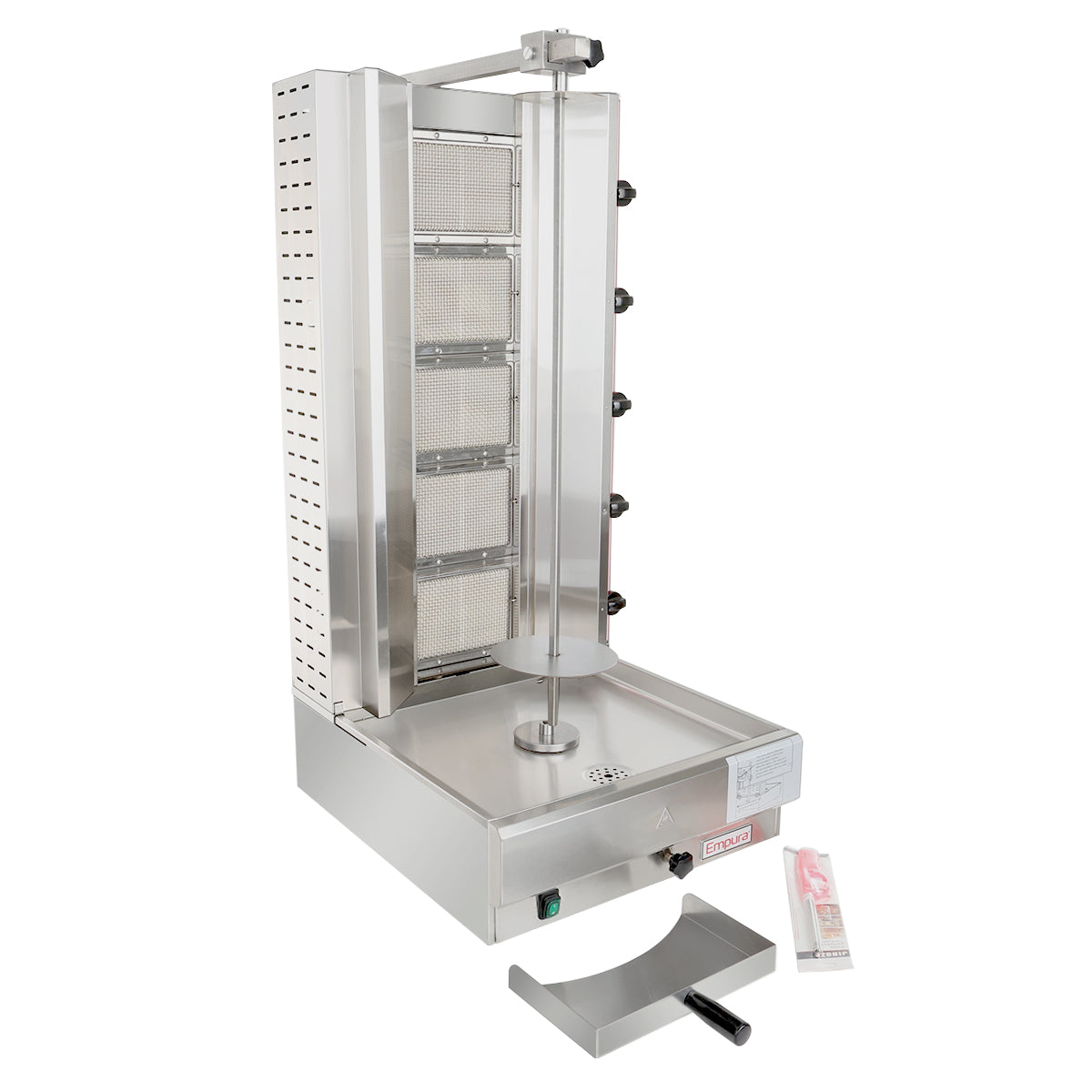
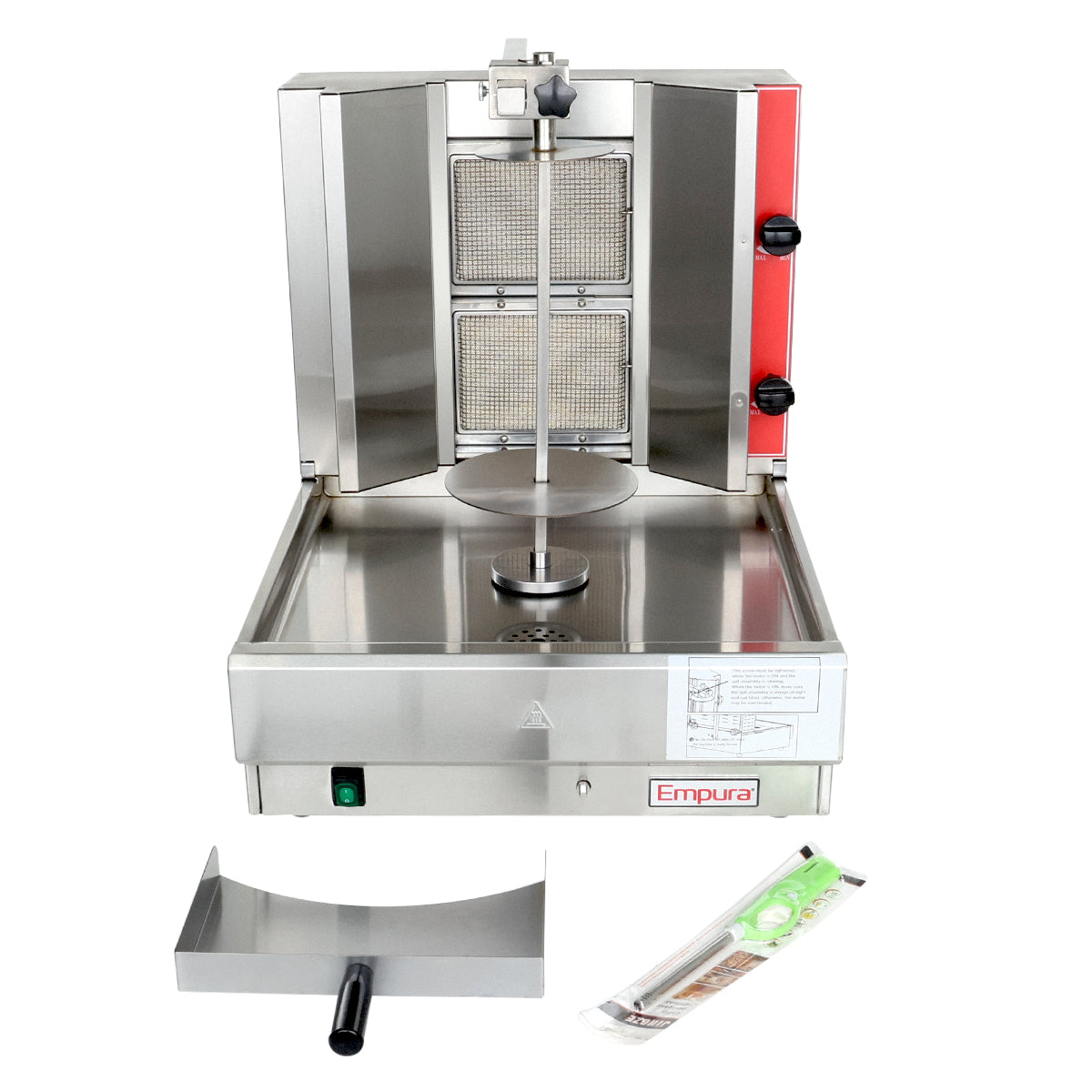
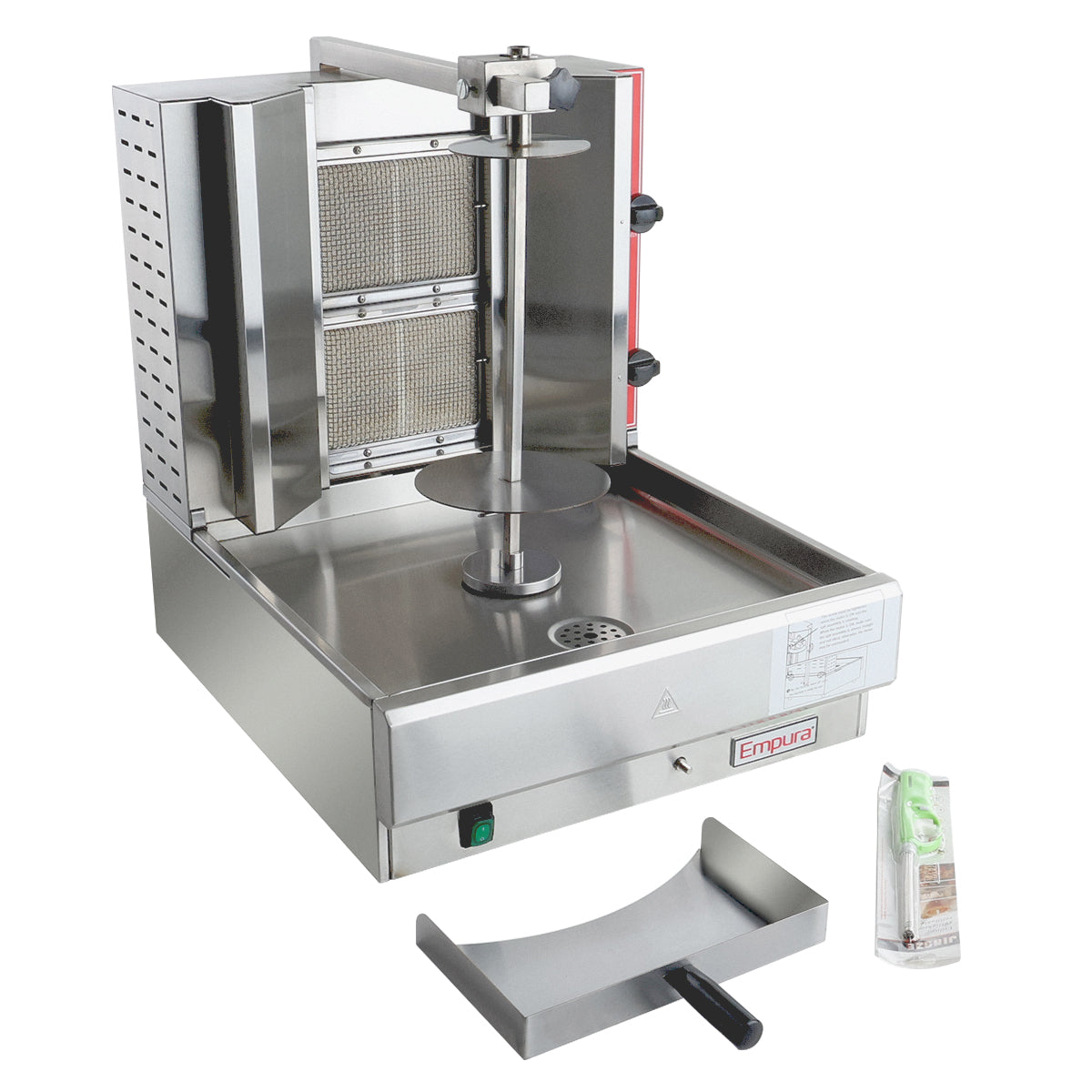
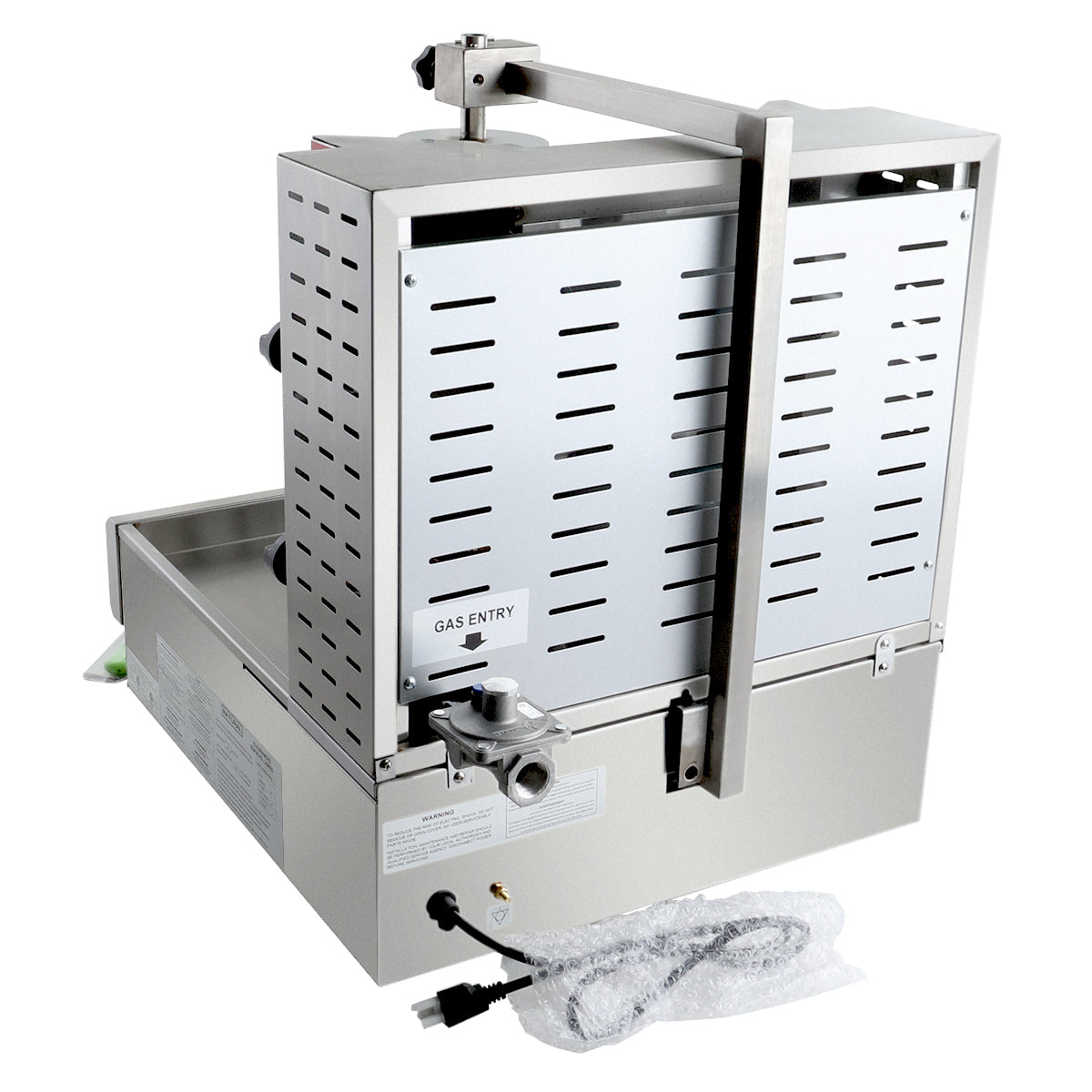
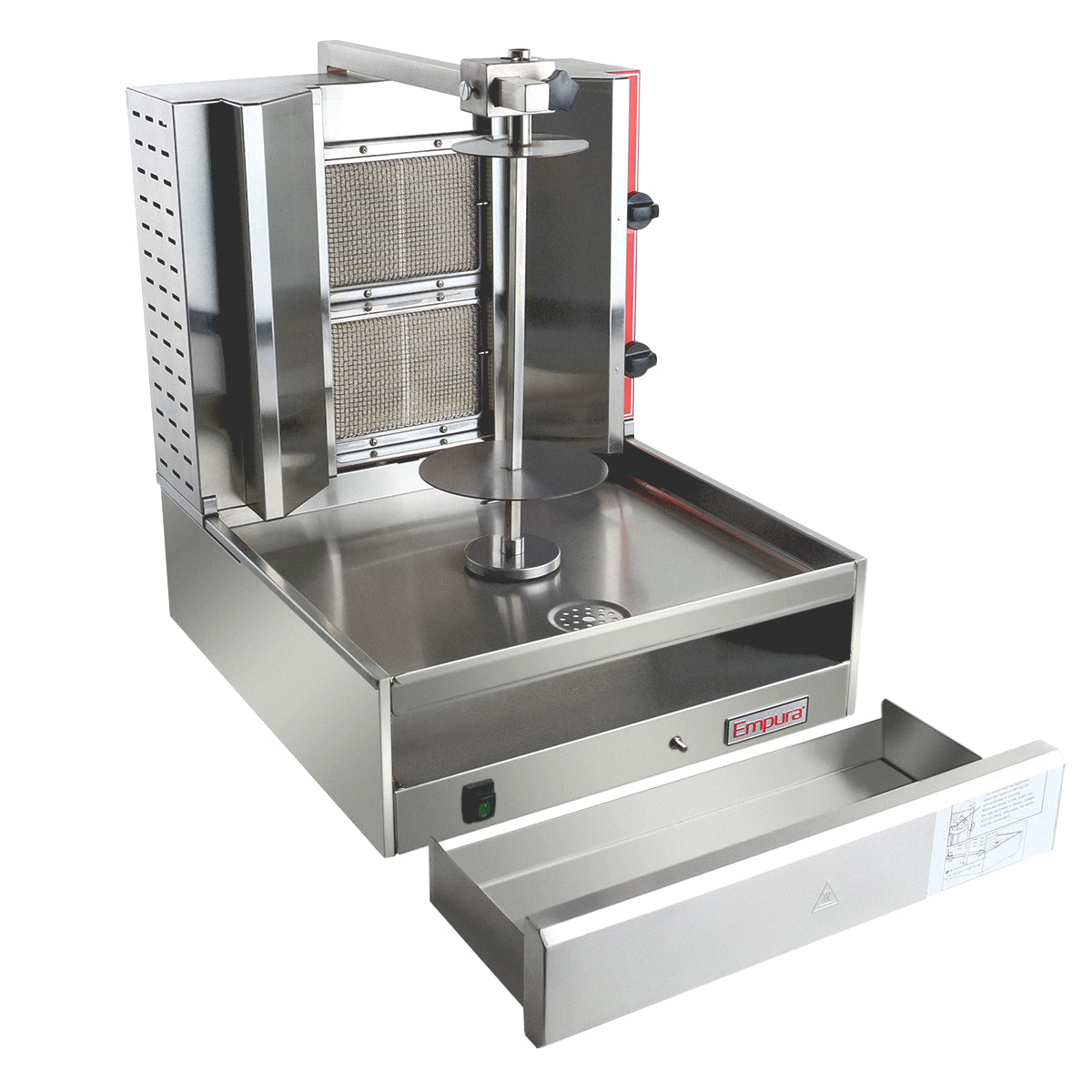
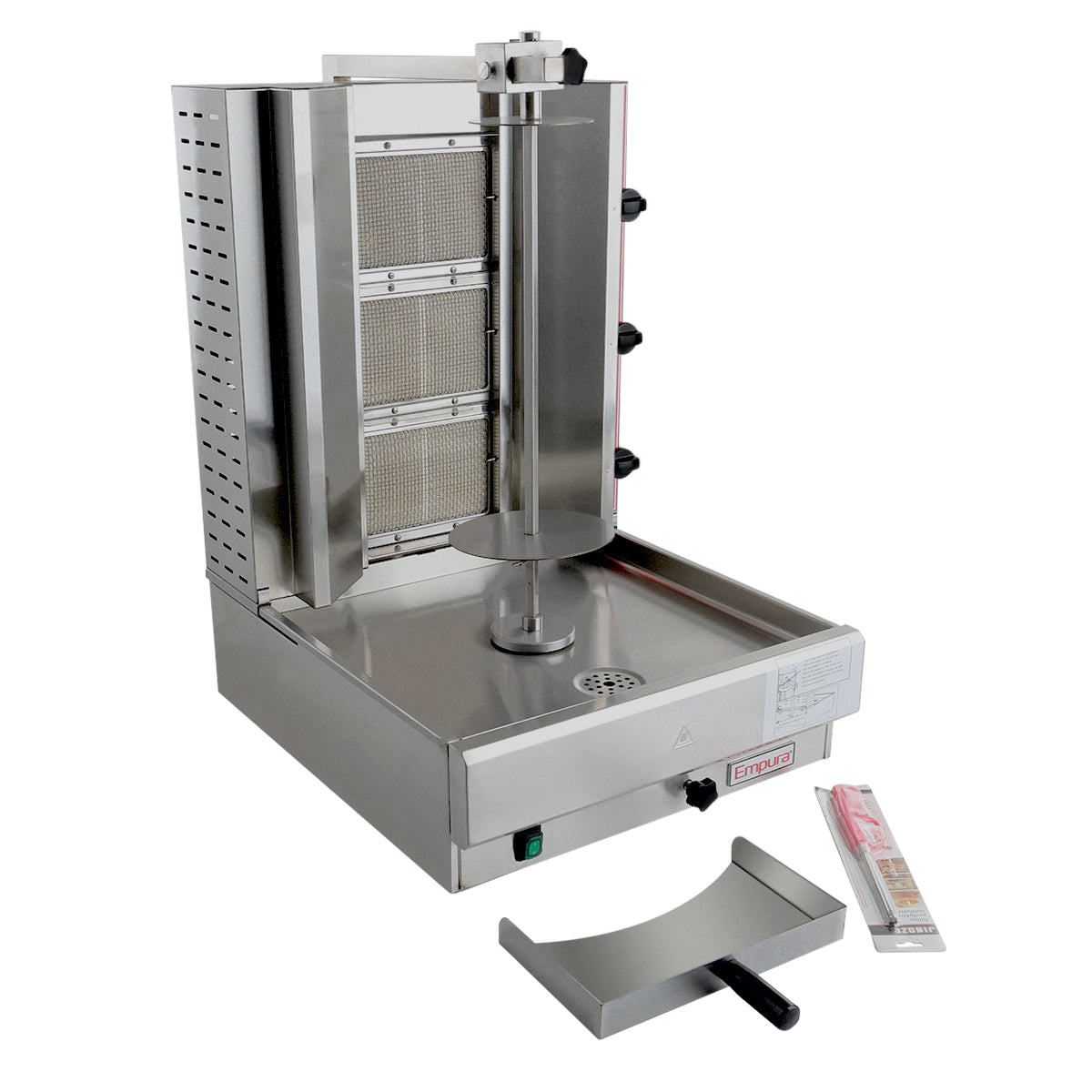
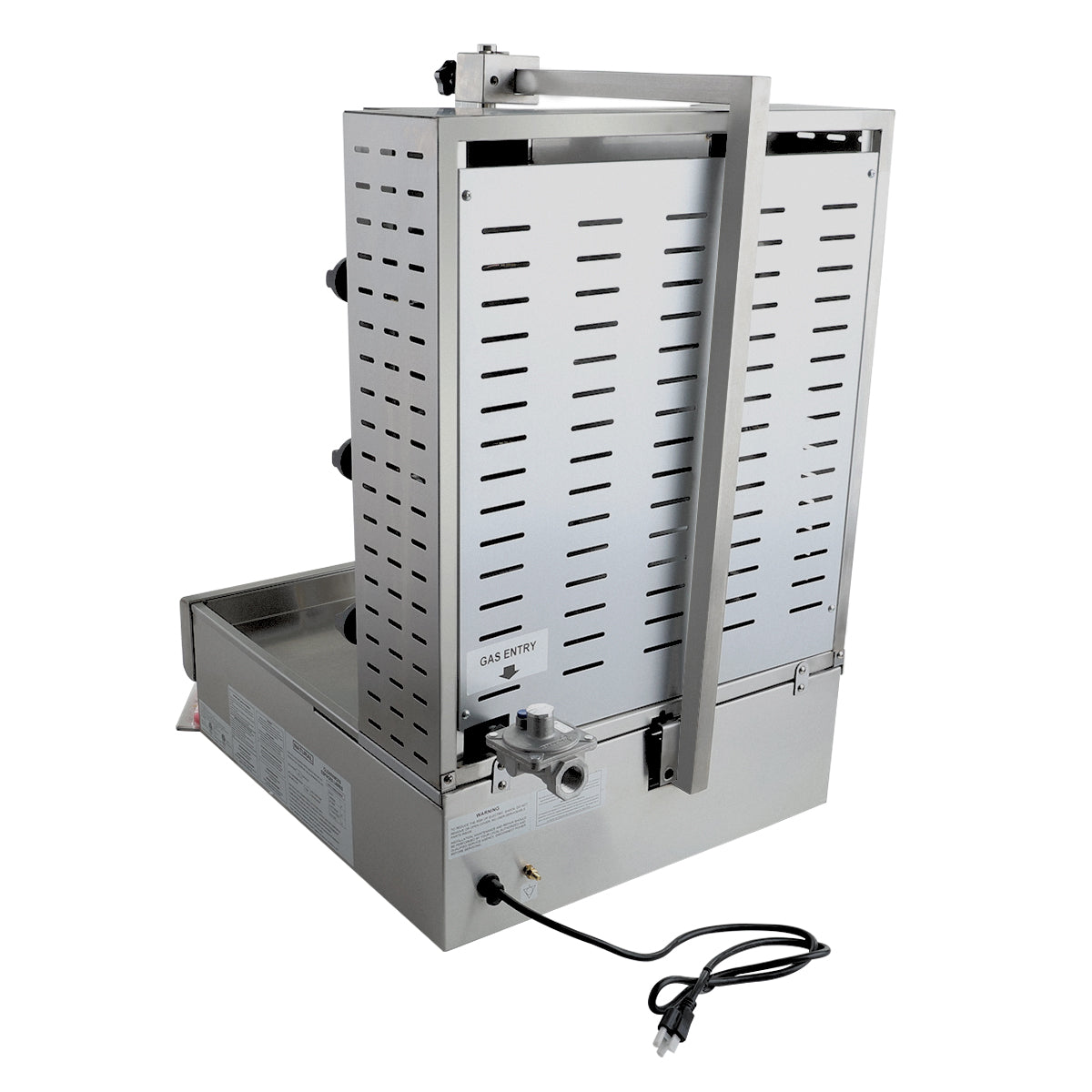
Empura's EGVB-45, EGVB-65, EGVB-100, and EGVB-130 hold 45, 65, 100, and 130 pounds of meat. Features include individually controlled infrared burners, adjustable spit-to-burner distance, stainless steel construction, a heat shield, continuous pilot ignition, and an oil collector. Check the exact model's gas requirements and installation instructions before planning utility connections.
Who uses gas vertical broilers?
- Restaurants
- Hotels
- Catering Operations
- Cafeterias
- Food Trucks
Frequently asked questions about gas vertical broilers
How is a vertical broiler different from a salamander broiler?
A vertical broiler roasts meat on an upright spit. A salamander broiler applies overhead heat to food on a horizontal rack, often for browning or finishing dishes.
Does a 100-pound capacity mean 100 pounds of cooked meat per hour?
It describes the meat load the spit supports. Hourly output depends on the product, the shape of the load, burner settings, and how fast staff slice.
Can a vertical broiler switch between natural gas and propane?
Only through a manufacturer-approved configuration or conversion. Gas components and supply requirements differ, so a qualified technician should verify the setup.
Does a gas vertical broiler need an exhaust hood?
Plan for commercial exhaust and fire protection suited to gas cooking and grease. The installation instructions and local authorities set the exact hood requirements.
How do you know when the meat is safe to serve?
Measure temperature with a food thermometer rather than judging by browning. USDA's safe minimum temperature chart recommends 160°F for ground beef, pork, lamb, and veal, and 165°F for poultry, including ground poultry. These are USDA recommendations; commercial procedures must also meet locally adopted food safety rules. Keep cooked slices separate from raw product.