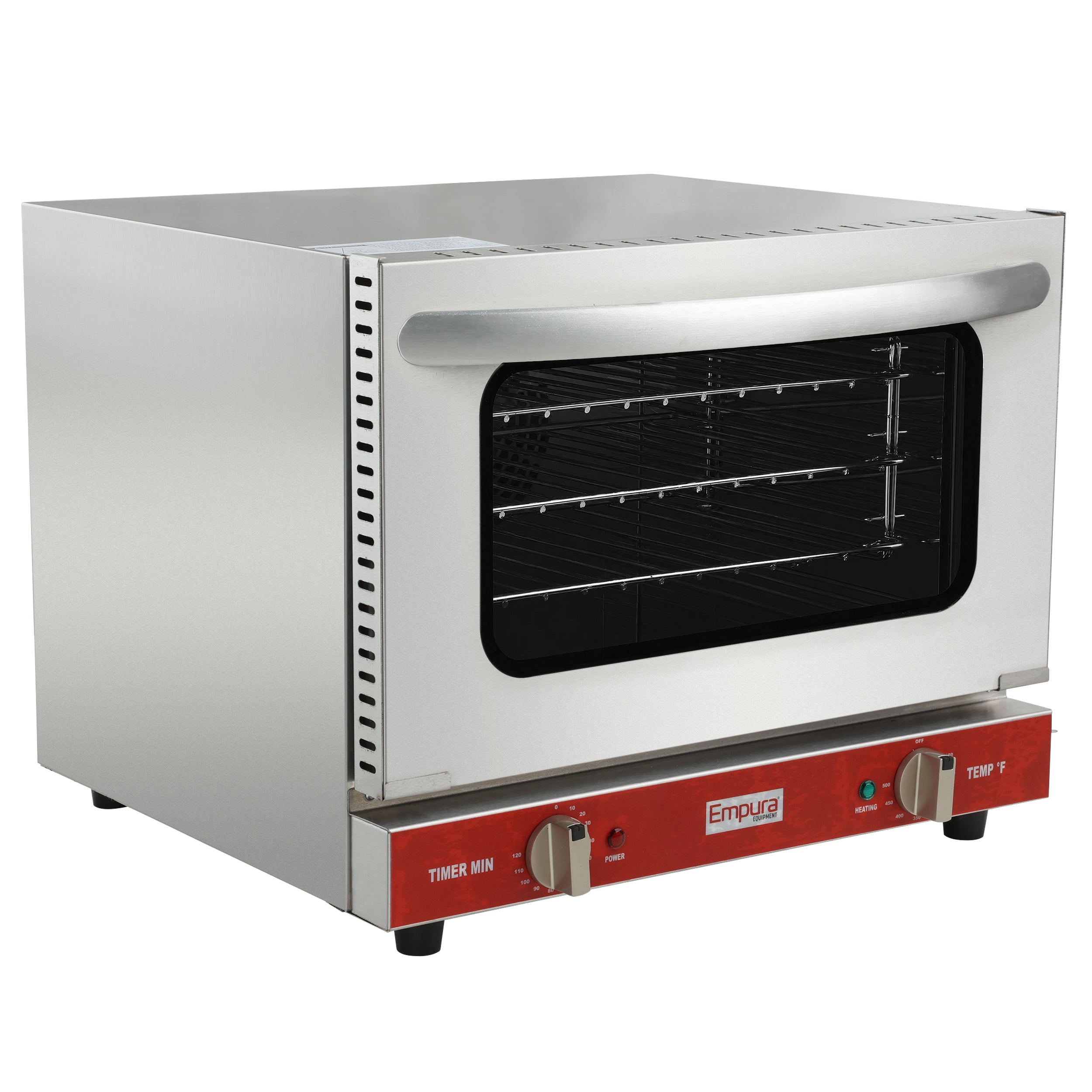
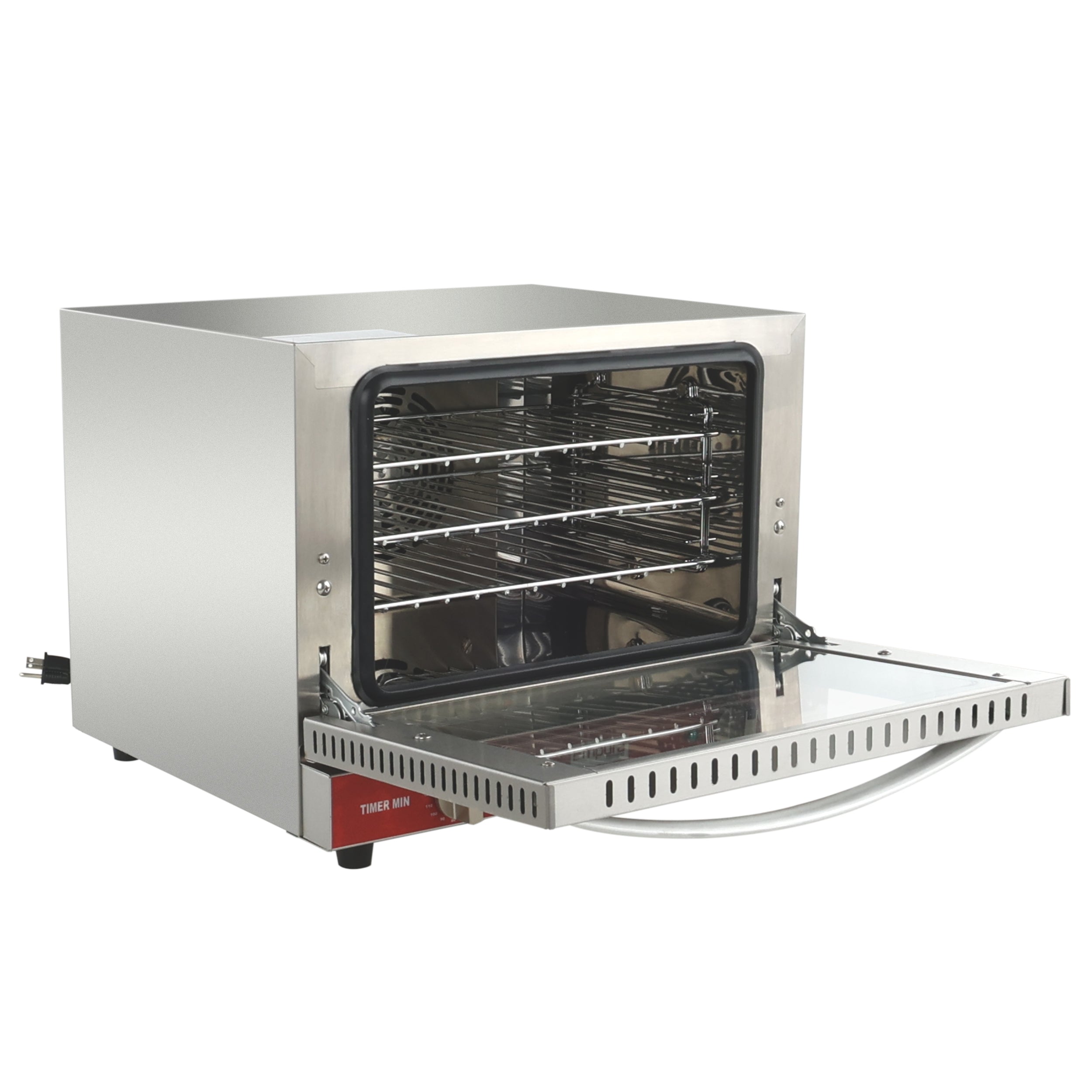
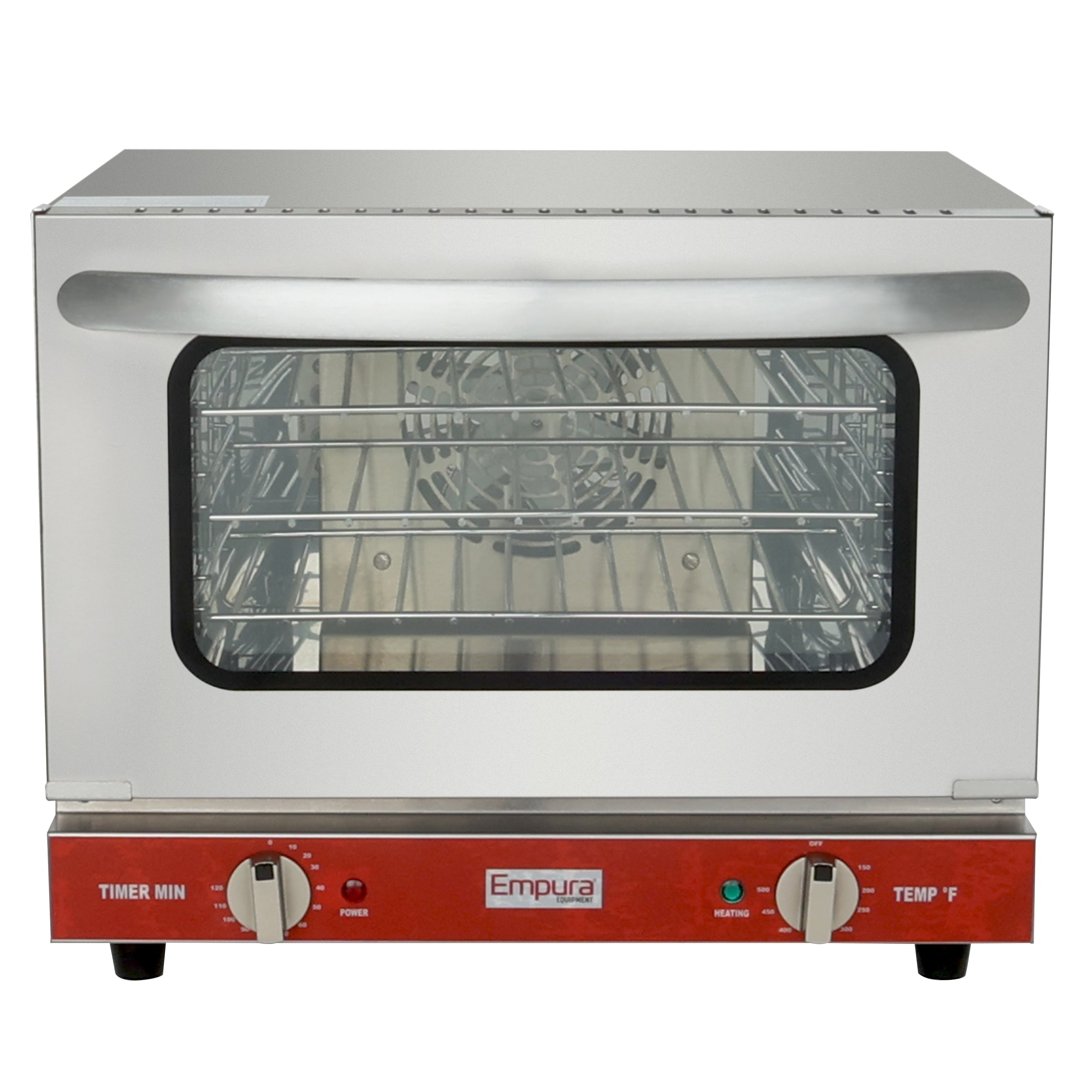
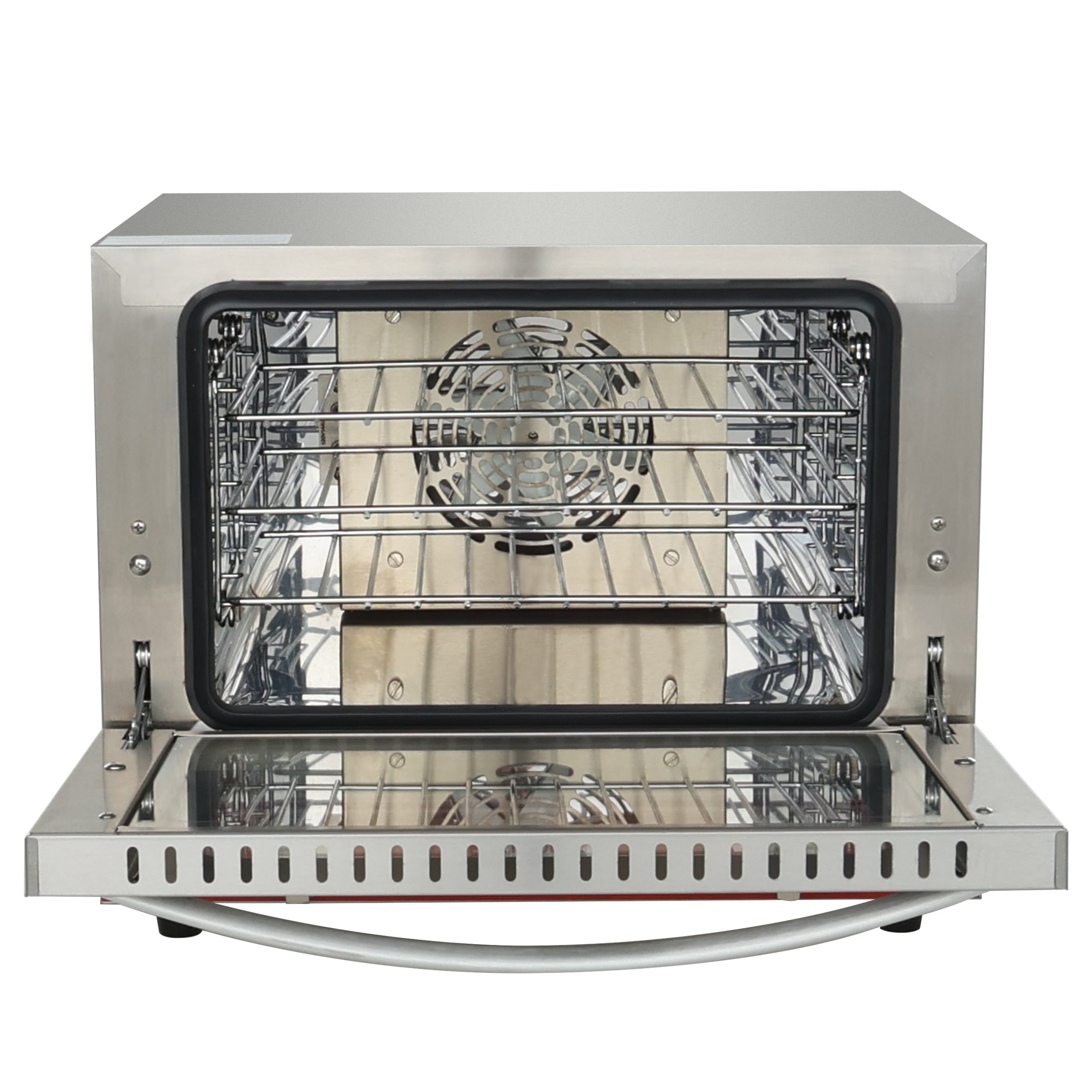
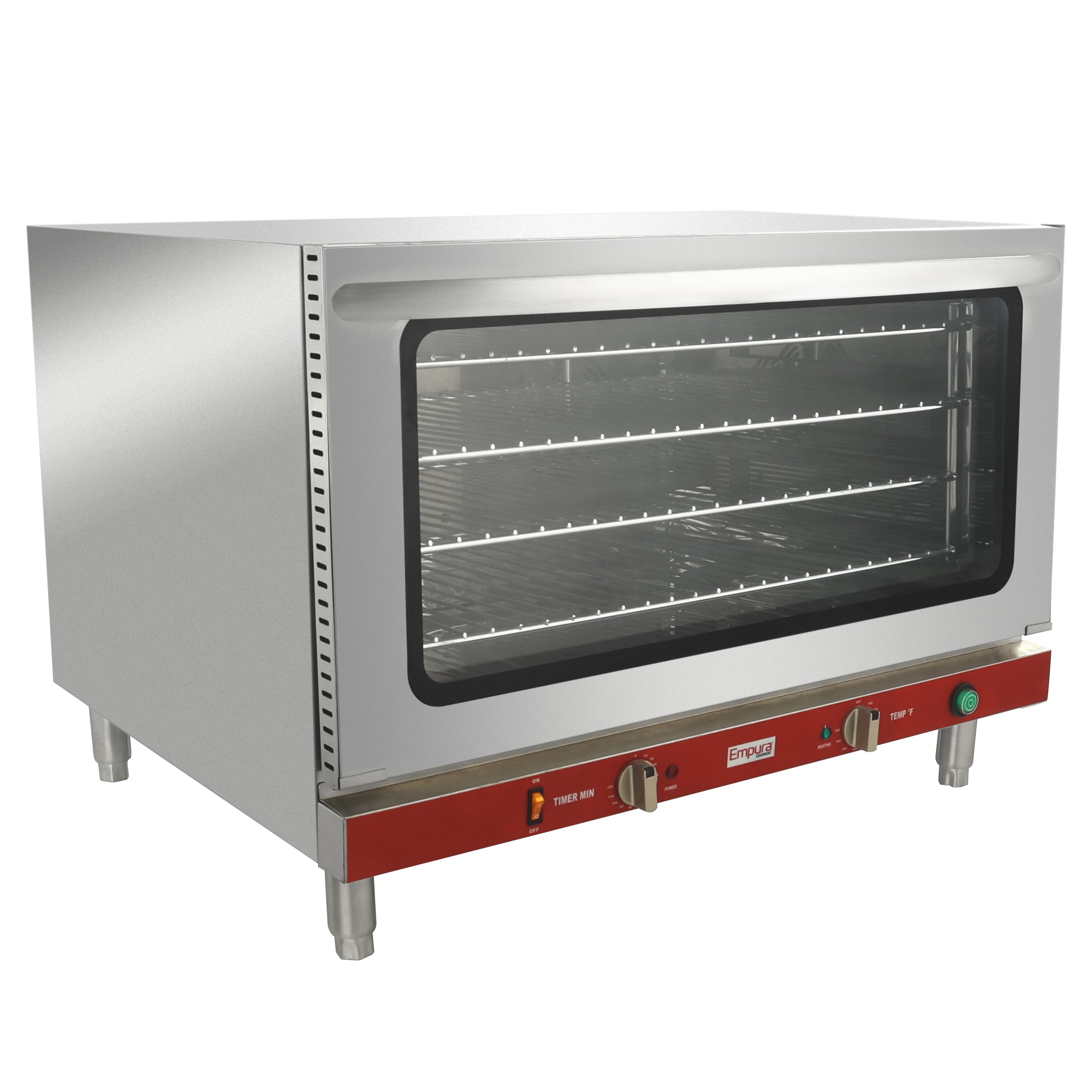
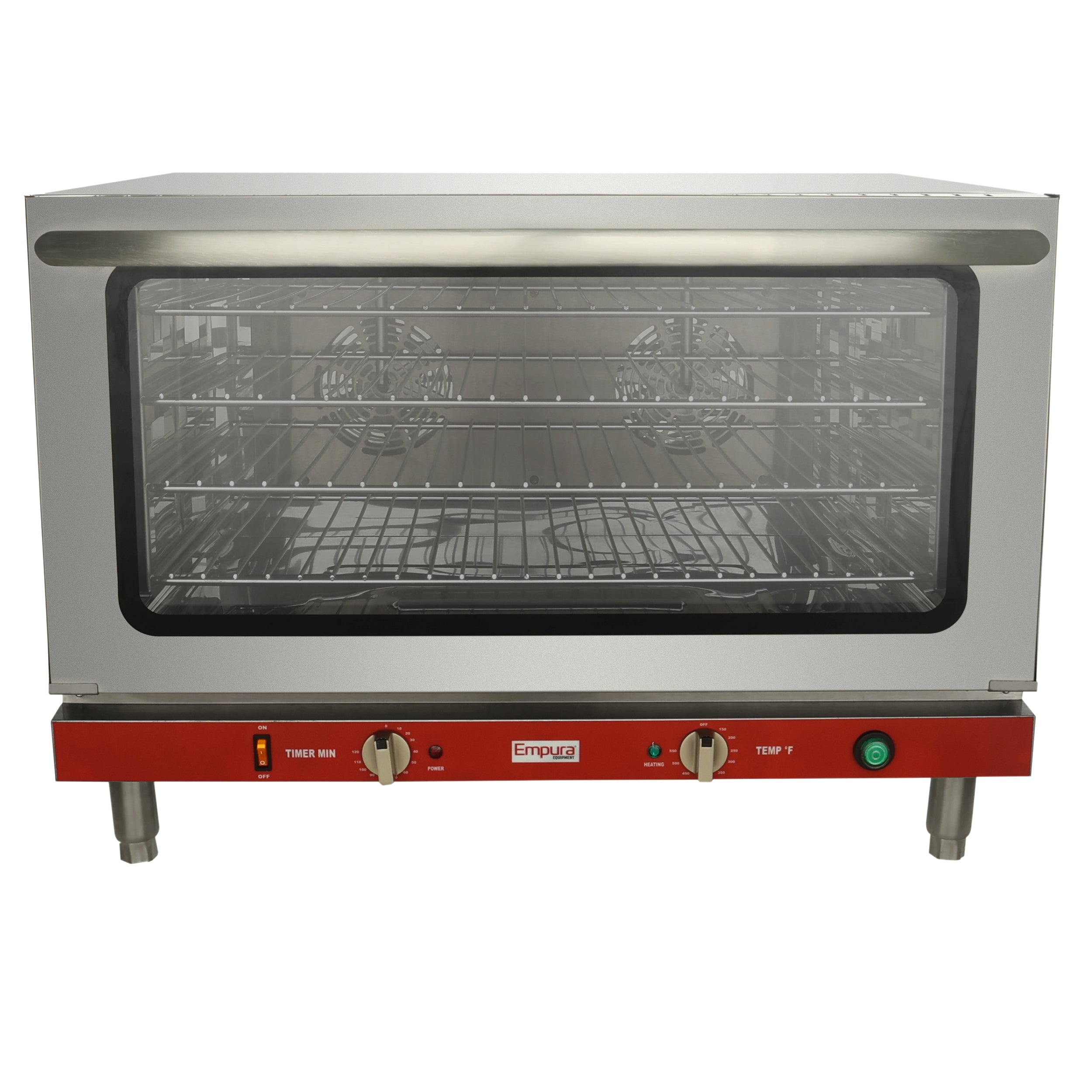
What should you look for in electric countertop convection ovens?
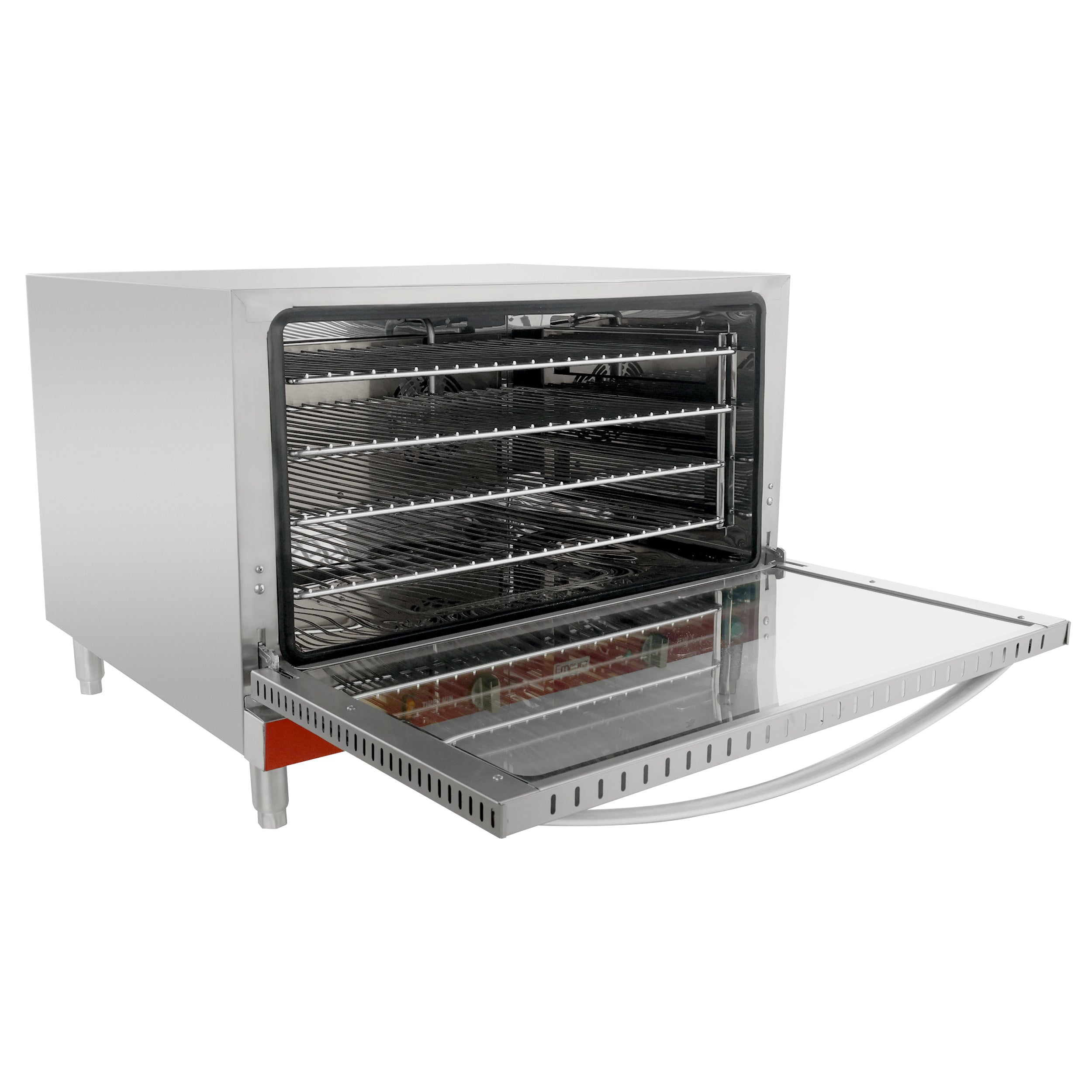
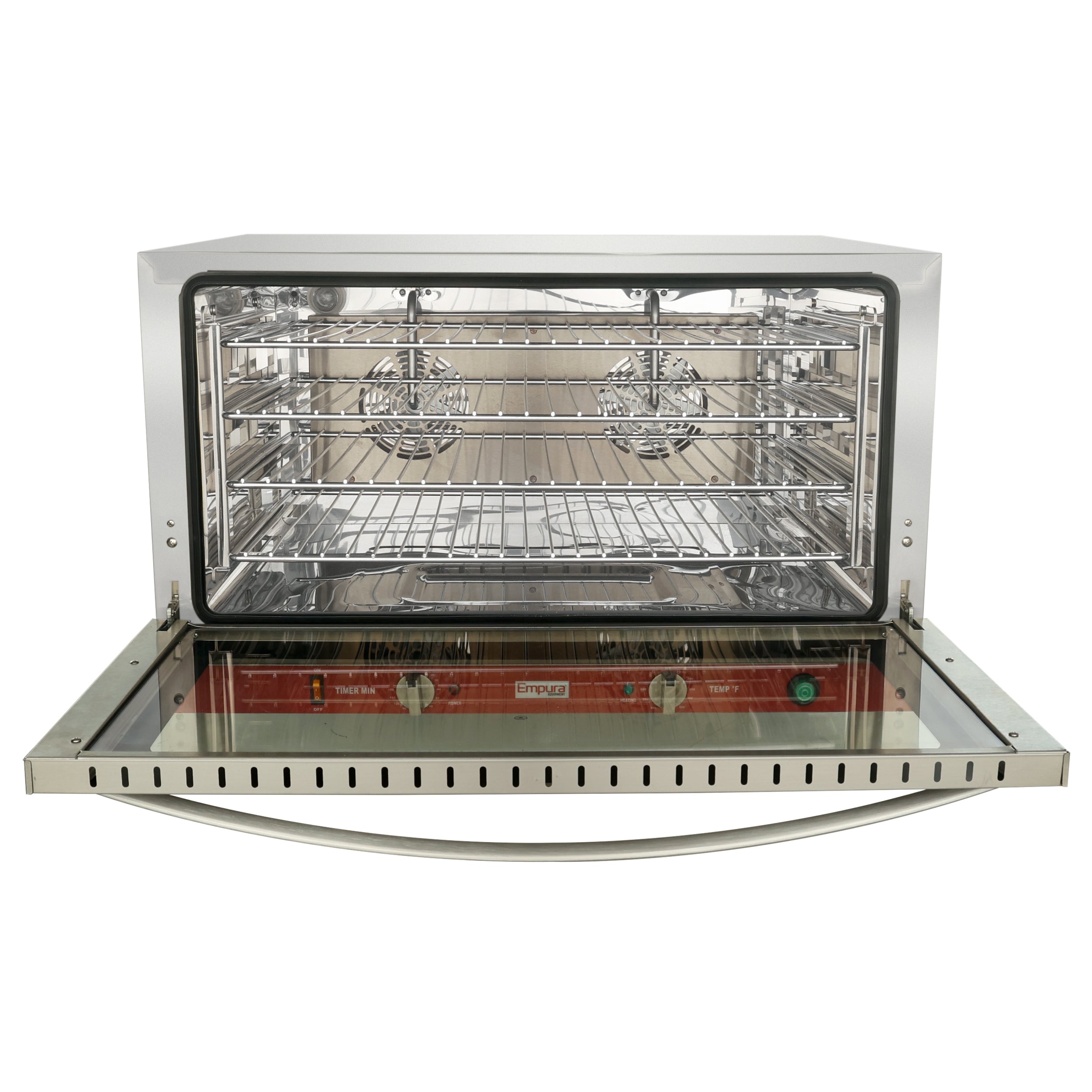
Match the oven to the pan size, batch volume, countertop space, and available electrical service. Compare cavity dimensions, rack positions, temperature range, timer and controls, door clearance, ventilation, and the weight the supporting surface can carry. Voltage alone does not determine compatibility; confirm amperage, wattage, plug or hardwire requirements, and the dedicated circuit.
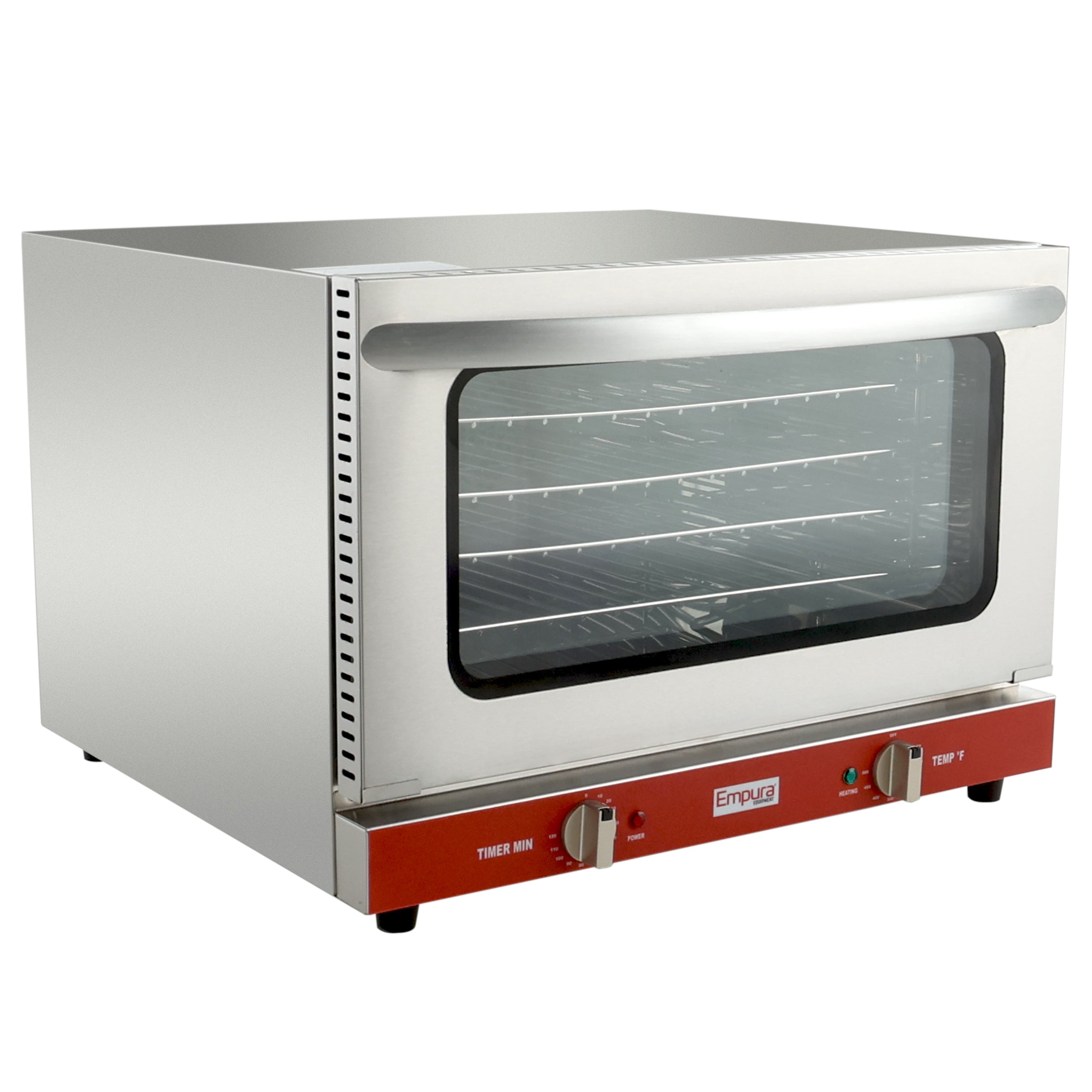
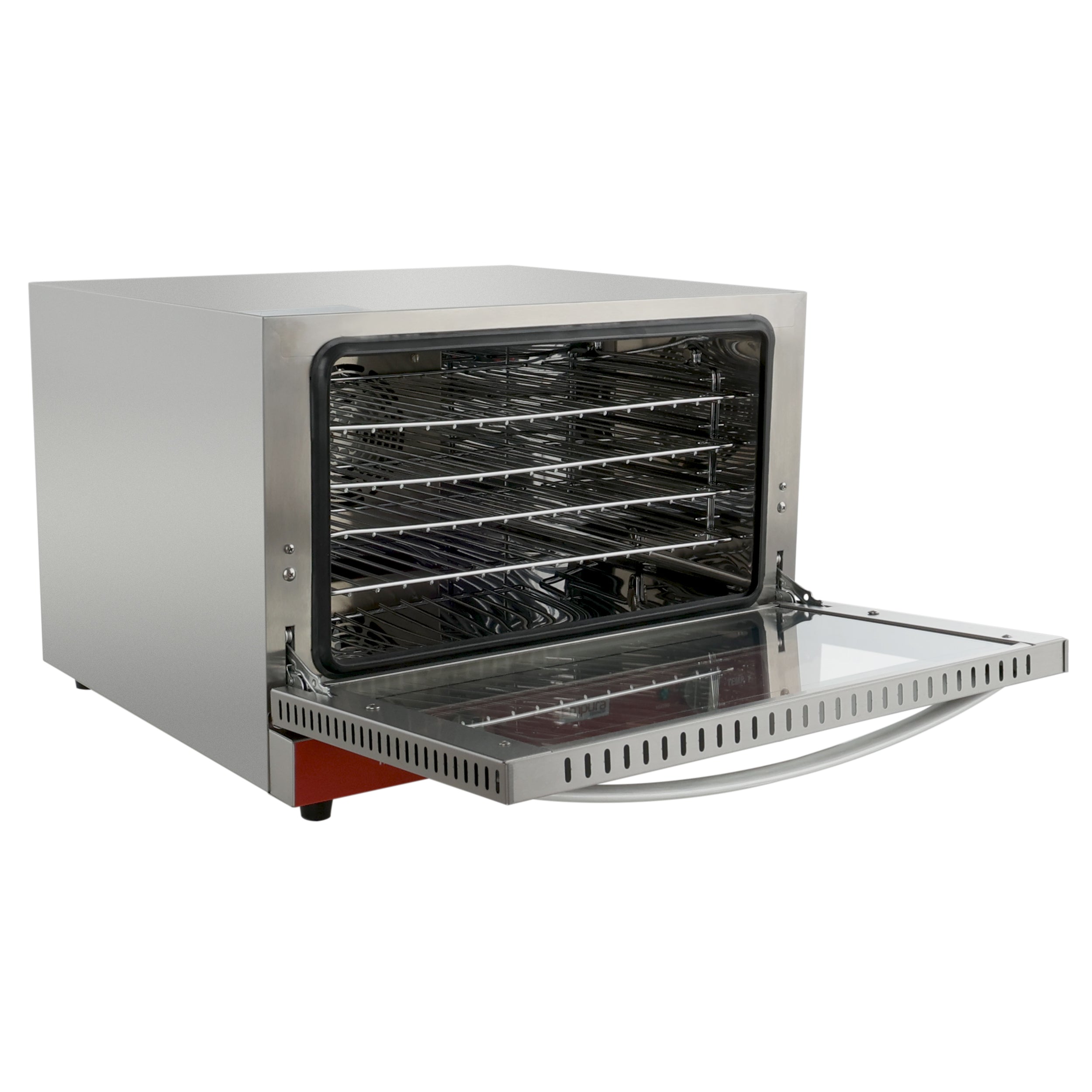
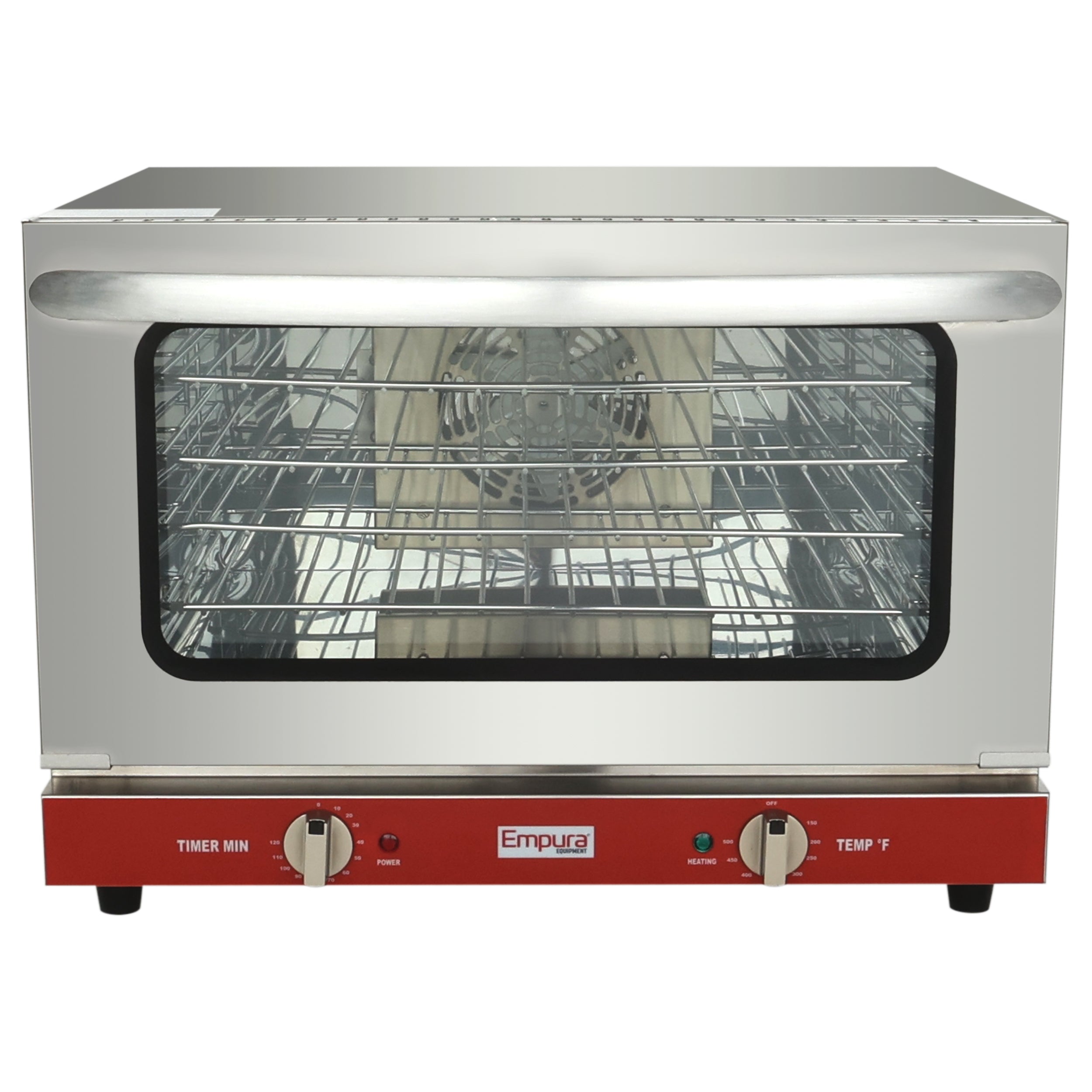
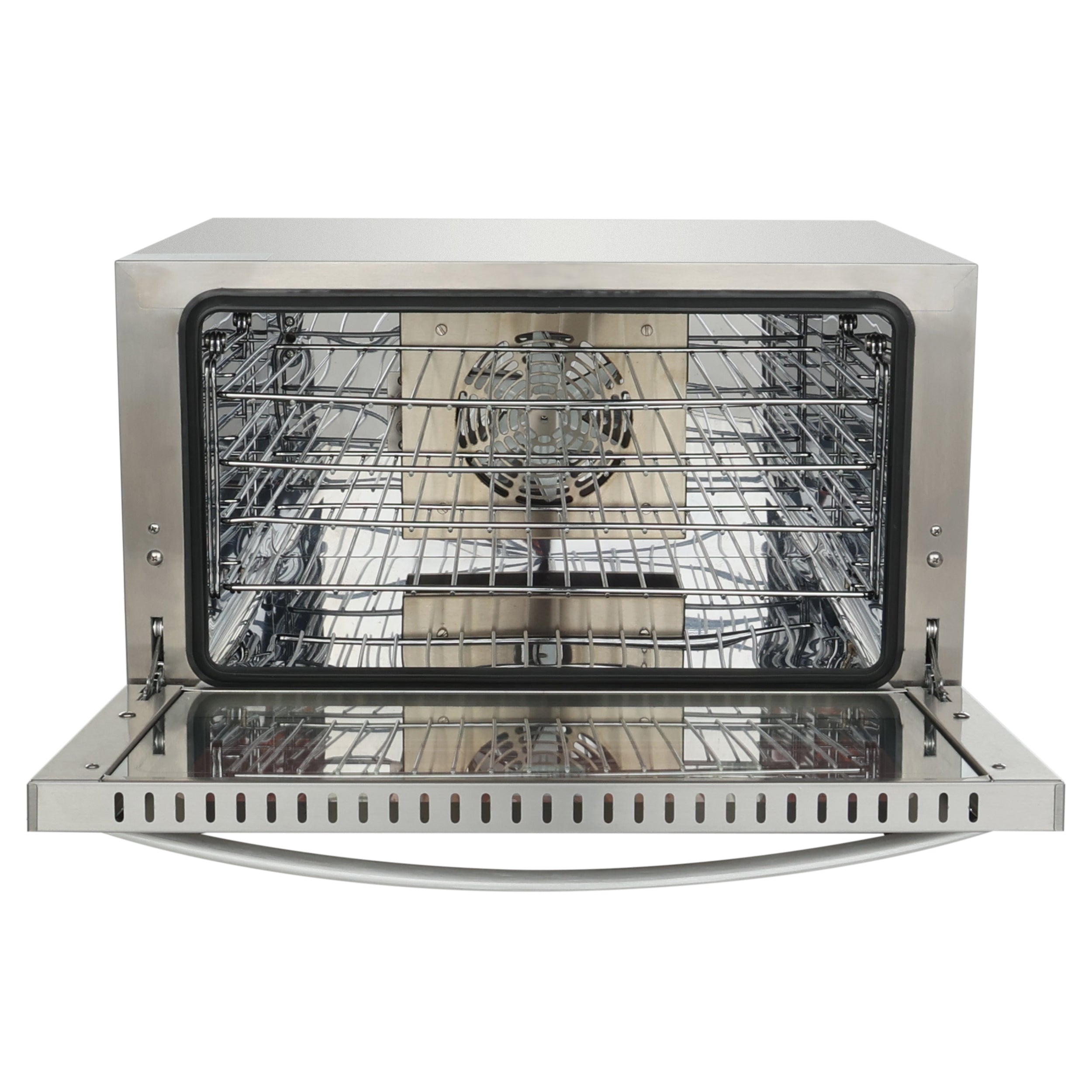
Empura's current collection includes 19-, 23-, and 32-inch countertop convection ovens. The live listings identify 120-volt models with published power ratings of 1,440, 1,550, or 5,450 watts, depending on the oven. Because the 5,450-watt listing is a substantial load for 120 volts, the branch-circuit and connection requirements should be verified directly from the model's data plate and manual before planning electrical service. The supporting surface must accommodate the oven's dimensions, operating weight, heat, and required clearances. Where reinforced appliance support is needed, an Empura equipment stand may be appropriate if its dimensions and load rating match the oven.
Who uses electric countertop convection ovens?
- Restaurants
- Hotels
- Bars
- Catering Operations
- Schools
- Healthcare Facilities
- Cafeterias
- Convenience Stores
Frequently asked questions
What can you cook in a countertop convection oven?
Depending on the model and pan fit, it can bake pastries, roast vegetables and proteins, reheat prepared food, toast items, and finish small batches.
What is the difference between convection and conventional baking?
A convection oven uses a fan to move hot air through the cavity. A conventional oven relies mainly on stationary radiant and natural-convection heat.
Do convection ovens cook faster?
They can shorten cooking time or use a lower set temperature for some foods, but results depend on the recipe, load, pan type, and airflow. Test and document settings for each menu item.
Does a countertop convection oven need a dedicated circuit?
Commercial ovens often require a dedicated circuit sized to the nameplate load. A qualified electrician should confirm voltage, amperage, receptacle, and overcurrent protection in accordance with the National Electrical Code (NFPA 70) and any local amendments.
Can a countertop oven sit on any table?
No. The surface must support the oven's operating weight and tolerate heat. Maintain the manufacturer's side, rear, and overhead clearances and do not block ventilation openings.



 FREE Delivery